Mobile Craps vs Desktop: How the Experience Compares
The craps table is the most spatially demanding game in the casino. Putting it on a phone screen requires genuine design tradeoffs, and not all of them are resolved in the player's favour.
The deal
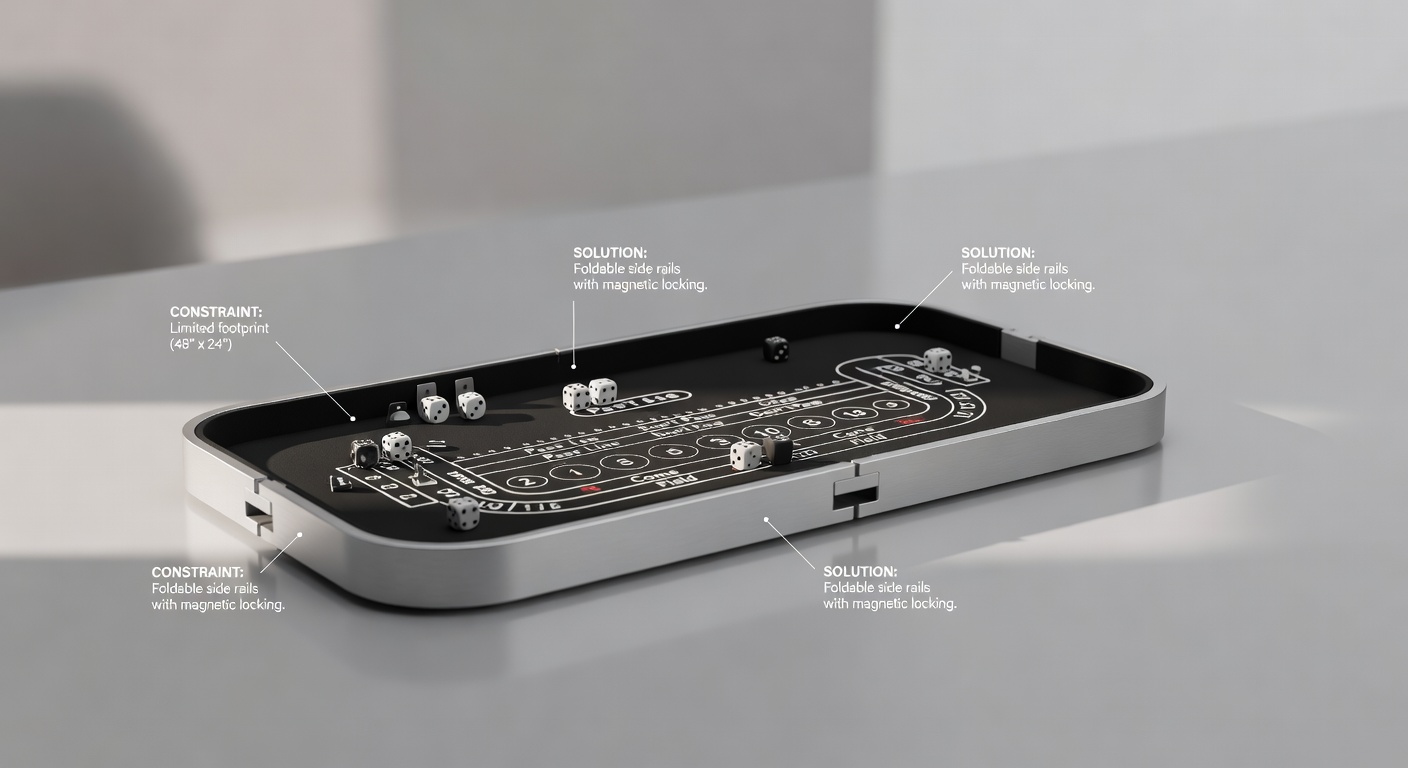
Craps has a problem that blackjack and roulette do not share: it is a genuinely complex physical object. The standard craps layout contains more than forty distinct betting areas. The Pass Line, Don't Pass, Come, Don't Come, the six Place bets, the eight Hardways and field bets, the Proposition bets in the center, plus the numbered boxes for Come bets in play. A full craps table at a casino is roughly the size of a bathtub, and experienced players stand at the rail with chips arranged in a personal geography they have maintained for decades.
Compressing this onto a 6-inch phone screen requires choices. How software developers make those choices, and which ones they leave to the player, is where desktop and mobile craps actually diverge.
Round 1: The Layout Problem
On desktop, the full craps layout is generally visible simultaneously. A 1080p monitor running a standard RNG craps game from a provider like Evolution or Microgaming will display the complete bet map at once. A player with a system involving simultaneous Pass Line odds, two Come bets with odds, and a Place 6 can set up that position by scanning the table once and clicking each spot. The spatial relationship between betting areas maps reasonably onto their location on a physical table.
On mobile, something has to give. The common solutions are:
- Scrollable layout: The full table is present but requires horizontal scrolling to see all of it. A player who needs to act on a Come bet that has traveled to the 9 box needs to scroll, locate it, and act, while the dice are moving. This introduces latency that doesn't exist on desktop.
- Simplified bet menu: The visual table is replaced or supplemented by a tap-to-select menu of bet types. This removes the spatial navigation problem but also removes the direct manipulation experience that most craps players prefer.
- Portrait-optimized redesign: Some providers build a separate mobile layout that removes the less-used proposition bets or relocates them behind a tap. This solves screen real estate at the cost of access to bets that technically still exist in the rules.
None of these solutions are wrong exactly. They are all making a genuine tradeoff between completeness and usability.
Round 2: Live Craps on Mobile
Live dealer craps, which Evolution launched in 2020 with their First Person Craps product and later with the fully social live version, adds a video stream of a physical craps table to the complexity problem. The betting interface overlays the video. On desktop, this overlay is manageable because screen real estate exists to show both simultaneously at useful sizes.
On mobile, the video window and the betting interface compete for the same pixels. Most implementations shrink the video significantly or make it a thumbnail. This is fine for some players and frustrating for others, particularly those who track dice sets (the practice of attempting to influence outcomes by setting the dice in a specific configuration before throwing, which craps purists debate vigorously and mathematicians dismiss).
The craps experience of watching a stickman work a full table, hearing the controlled chaos of a hot shooter's run, exists on mobile in reduced form. That observation is not a complaint about mobile craps specifically; it is an accurate description of what the format can and cannot deliver.
Round 3: What Mobile Does Better
Mobile craps does a few things desktop does not. The ability to play single-session craps on a commute, waiting room, or sofa without setting up a desktop environment lowers the activation energy considerably. For casual players who want to bet Pass Line with single odds and leave, mobile is perfectly adequate. The core mechanics are all present.
Touch interfaces can also make certain bets faster. Tapping a Place bet on a mobile interface, where the target is a finger-sized zone, is arguably quicker than precise mouse placement in some desktop implementations with small click targets.
RNG craps on mobile, specifically, runs on the same certified RNG as the desktop version. The UKGC or MGA-licensed platform's certified game math does not change based on what device accesses it. The house edge on a Pass Line bet is 1.41% whether you're on an iPhone or a monitor. The certificates are device-agnostic.
Round 4: The Practical Upshot
For complex craps strategies involving multiple simultaneous bets, come bets with odds, and active position management, desktop remains meaningfully better. The layout access and the visual clarity make the mechanical execution of the strategy faster and less error-prone.
For straightforward play or occasional sessions, mobile is serviceable. The casino industry's investment in mobile-optimized craps interfaces has improved substantially since 2019, and what passed for mobile craps five years ago, a barely scaled desktop layout with click targets sized for a stylus, is largely gone from reputable operators.
What has not changed is the game itself.