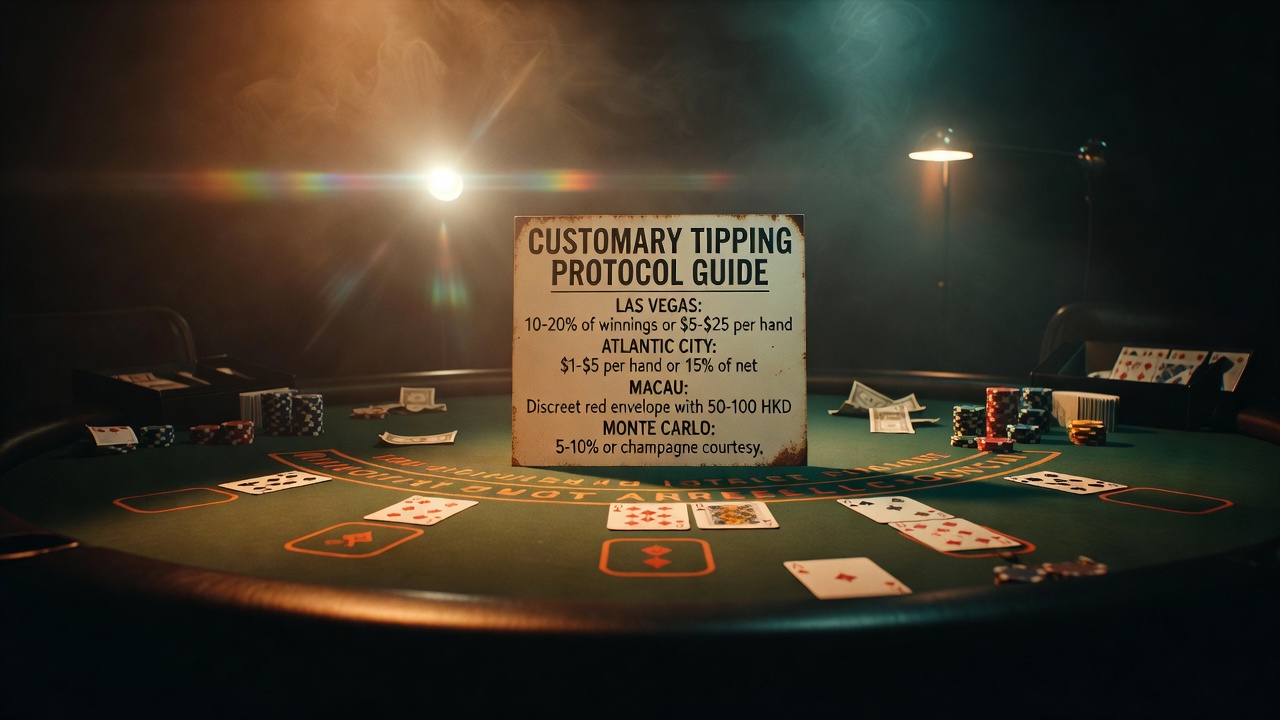
Tournament Blackjack: Competition Changes the Game
Tournament blackjack requires a completely different strategy than cash blackjack because the goal is not to maximize money but to outlast opponents.
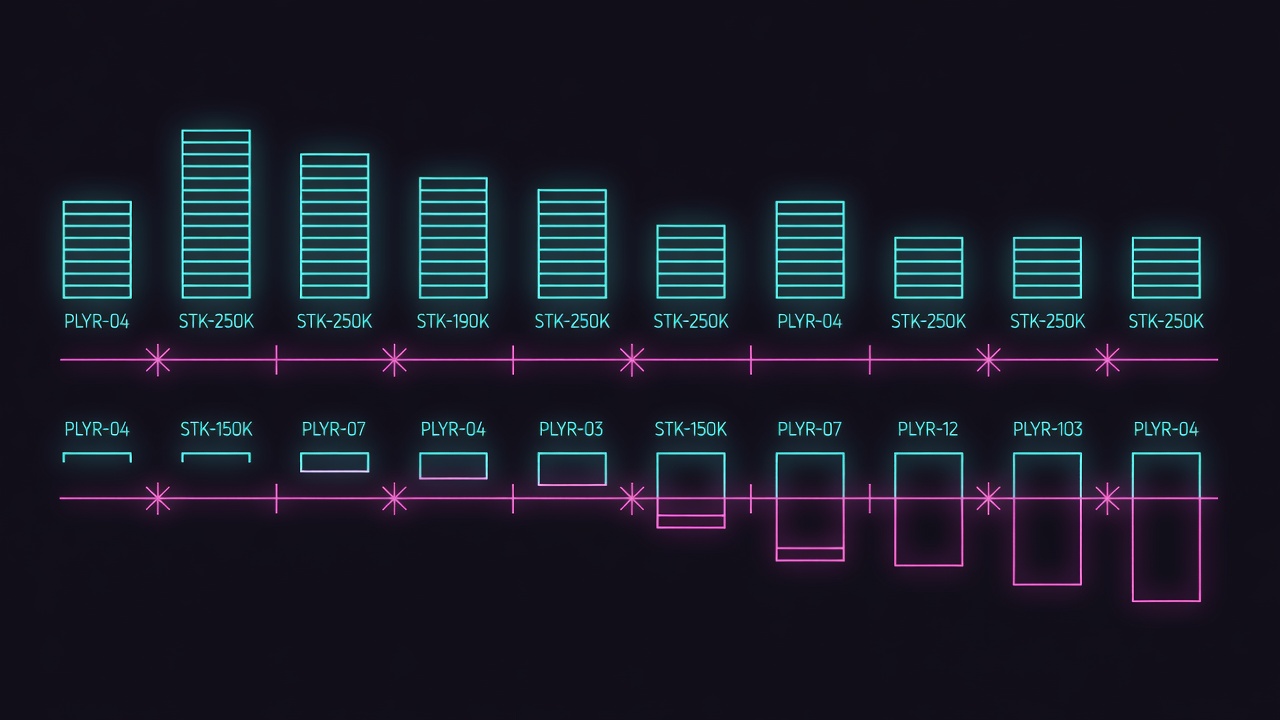
The deal
Tournament blackjack is a game where most strategic principles from cash blackjack are inverted. In cash games, you want to maximize your bankroll. In tournaments, you want to last longer than everyone else.
The structure is simple: players start with equal chip stacks. They play hands. Chips are won and lost. The tournament ends when one player has all the chips.
Payouts are structured. The player who finishes last gets nothing. The second-to-last finisher gets a small prize. The winner gets the large prize. The distribution creates incentives that cash blackjack does not have.
Round 1: The Strategic Shift
In a cash game, a hand like 12 vs dealer showing 6 is a borderline case. Basic strategy says to stand. Some players might hit. The difference in EV (expected value) is small.
In a tournament, that same hand is a crucial decision point. If you are short-stacked, you might double down regardless of basic strategy because you need to gamble to catch up. If you are chip leader, you might fold hands you would normally play because the risk of losing your lead is higher than the potential gain.
Strategy follows incentives. In cash blackjack, the incentive is to win money. In tournaments, the incentive is to survive.
Round 2: Position and Stack Size
In tournament blackjack, your position and stack size matter more than in cash. A player with large chip stack can afford to play tight (fold weak hands). A player with small stack must gamble.
A player in late position (act after most other players) has information advantage. A player in early position has no information.
These concepts barely matter in cash blackjack (where each player acts independently). In tournament blackjack, they are everything.
Round 3: The Bubble Effect
Tournaments have a bubble, the moment when only some players will cash (get a payout) and others will get nothing. When the bubble approaches, play tightens dramatically.
Players who are just barely above the bubble cut-off will play very tight to survive. Players just below the bubble will gamble to accumulate chips. Players far above or below the bubble will play relatively normally.
This creates exploitable patterns that a good player can take advantage of.
Round 4: Why Players Struggle
A player good at cash blackjack will often struggle in tournaments because the decision-making framework is completely different. You cannot just play basic strategy and win. You have to factor in chip position, payout structure, and opponent behavior.
The player who plays perfectly in a cash game might play terribly in a tournament by playing the same strategy.
Round 5: The Mathematical Foundation
Tournament strategy is based on chip equity (what percentage of total chips you hold divided by total chip distribution determines your equity in the prize pool).
If there are four players and you have 25 percent of the chips, your equity in the prize pool is approximately 25 percent of the total money offered. This changes as chips move around.
Optimal tournament play maximizes your chip equity relative to your risk. A skilled player understands this calculation intuitively and makes decisions based on chip equity.
Round 6: Practical Implications
If you are tournament blackjack player, forget cash blackjack strategy. Learn to think in terms of chip stacks and payout structures. Understand that the goal is not to win money on the next hand but to last longer than opponents.
If you are a cash blackjack player considering tournaments, be prepared for a complete strategic shift. Tournament play is a different game that happens to use the same cards.