Why Some Countries Ban Specific Roulette Variants
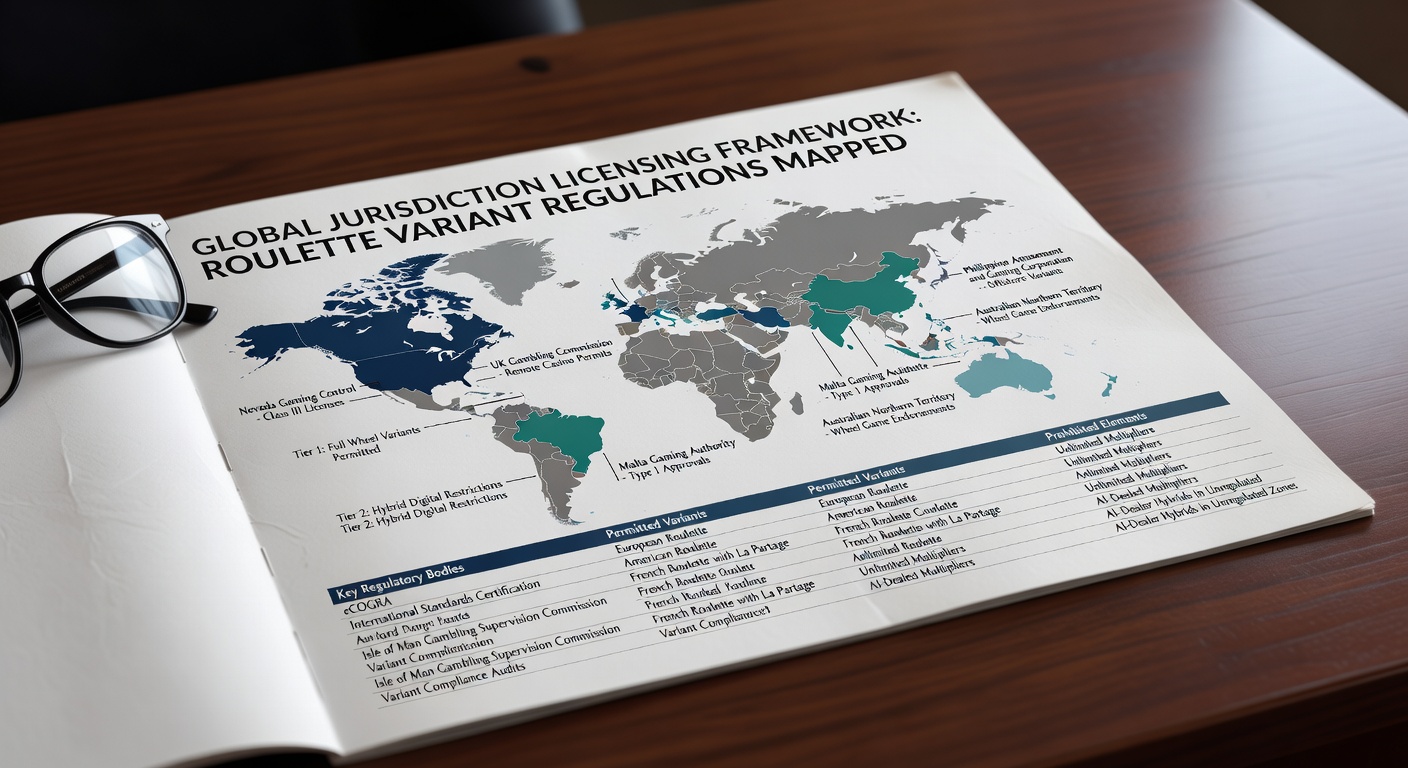
Not every version of roulette is legal everywhere. Some countries ban specific variants, and the reasons reveal a lot about how different governments think about probability, harm, and the purpose of a casino table.
The deal
I buy one lottery ticket a week. Two dollars. Not because I expect to win, but because winning is allowed to remain a possibility for seventy-two hours, and that possibility has a value I find difficult to express in purely economic terms. The actuaries at the state lottery commission have done the math. I understand the math. I buy the ticket anyway.
I mention this because I think it explains something about why roulette variants become a regulatory question at all. The game is not primarily an investment vehicle. It is an occasion for a particular kind of anticipation, and different societies have different ideas about which occasions are appropriate and which are not.
Round 1: The Single-Zero Question
The most widespread variant distinction is between European roulette (one zero, house edge of 2.7 percent) and American roulette (two zeros, house edge of 5.26 percent). This is not a ban in the strict sense, but several jurisdictions effectively prohibit American roulette by establishing a maximum allowable house edge for casino table games.
Germany's gambling regulation, administered at the Lander level, has historically favored single-zero roulette on exactly this basis. The logic is consumer protection: a government that permits gambling accepts a degree of responsibility for the terms under which citizens gamble, and a house edge nearly double the European standard is, in this view, exploitative rather than merely unfavorable.
The Netherlands, whose gambling reform under the Remote Gambling Act of 2021 brought online casinos under the Kansspelautoriteit's supervision, similarly tends toward single-zero standards for licensed operators.
Round 2: The Triple-Zero Variant
Some American land-based casinos, notably the Venetian in Las Vegas, introduced triple-zero roulette in 2016. The three-zero wheel carries a house edge of 7.69 percent. It attracted significant commentary from players, a degree of criticism from consumer advocates, and no legislative response.
This is interesting. Nevada permits the triple-zero wheel because Nevada's regulatory philosophy, administered through the Gaming Control Board, is fundamentally operator-permissive: if the bet is offered honestly and the player accepts it knowingly, the edge is the operator's to set. Nevada does not have a maximum edge rule for roulette.
Several European jurisdictions would not permit the triple-zero wheel under their frameworks. The MGA's technical standards for RNG games include fairness provisions that a 7.69 percent edge on what is effectively a pure chance game might strain, depending on interpretation.
Round 3: The En Prison and La Partage Rules
French roulette includes rules that reduce the effective house edge on even-money bets: La Partage returns half the even-money bet when the ball lands on zero, reducing the house edge to 1.35 percent. En Prison allows the player to leave the bet for one more spin rather than lose it.
Most jurisdictions that permit roulette do not require operators to offer these rules. Some operators offer them voluntarily, as a differentiating feature for sophisticated players. Some jurisdictions that take a protective view of gambling consumers have considered making La Partage mandatory, on the basis that offering the single-zero wheel without La Partage is providing an inferior version of the game that could be better without changing anything fundamental.
The philosophical divide here is between a regulatory tradition that says the state sets the floor and the market fills in above it, versus one that says the state optimizes the terms in the public interest. Both positions are coherent.
Round 4: The Online Variant Question
Live dealer roulette adds a layer. Evolution Gaming, the dominant live dealer provider, offers a title called Lightning Roulette that adds randomly multiplied numbers on each spin. The game uses a single zero but adds a fee built into the payout structure: standard wins on multiplied numbers pay less than the theoretical amount, which funds the multiplier prizes. The effective RTP is lower than standard single-zero roulette.
Some regulators have asked whether Lightning Roulette constitutes a materially different game from standard roulette and whether it should require separate certification. Evolution holds MGA and UKGC approval for the title, which means the two most demanding licensing bodies have found it acceptable. Other jurisdictions apply their own analysis.
There is something pleasing about the complexity here, even from my position of buying two-dollar tickets and not expecting very much. A game as old as roulette, unchanged at its core mechanism since the eighteenth century, still generates genuine regulatory debate because the question of which version of it is appropriate never quite resolves. The wheel keeps turning, and governments keep deciding how many zeros to allow on it.