Nevada Legalized Gambling in 1931: Here is Why
Nevada legalized gambling in 1931 to generate tax revenue during the Great Depression. The decision created the foundation for everything that followed.
The deal
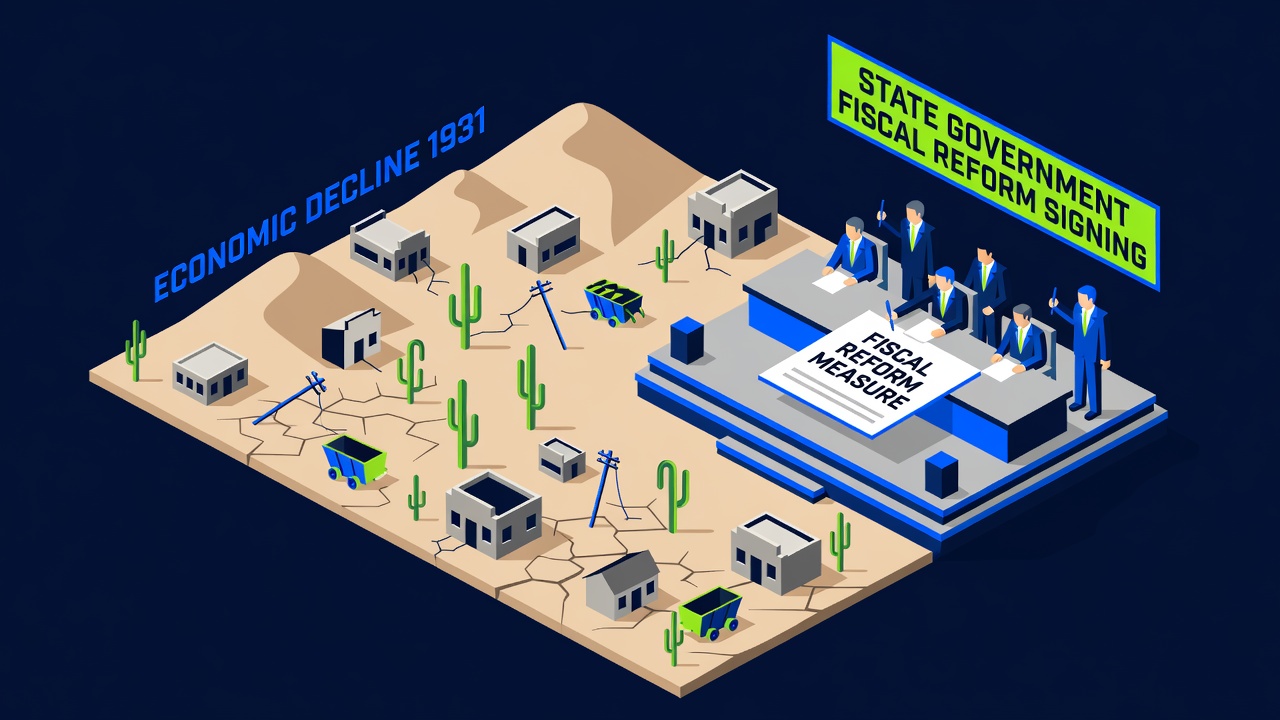
Nevada in 1931 was broke. The Great Depression had collapsed the mining industry that built the state. Tax revenue was gone. The state government was not paying teachers. Infrastructure was crumbling.
In this context, the state legislature passed Assembly Bill 98. It legalized gambling.
The vote was not dramatic. Nobody thought this was revolutionary. They thought it was a practical solution to an immediate problem: how do we raise money without raising taxes on an already devastated population.
The answer was simple: charge a license fee to casino operators. Tax gambling winnings. Let the casinos handle the financial risk while the state collected fees.
But what happened is that Nevada did not just solve its immediate fiscal crisis. It created an entire industry that would define the state for a century.
Round 1: The Immediate Economic Impact
Casinos opened immediately. Las Vegas, which had been a railroad town of about five thousand people, suddenly had a reason for people to visit. People from California, which did not allow gambling, could drive to Las Vegas and gamble legally.
Tourism became viable. Hotels opened. The tax revenue materialized.
By 1932, one year after legalization, Nevada had collected enough gambling license fees and tax revenue to stabilize the state budget. The immediate crisis was averted.
Round 2: The Regulatory Innovation
Nevada created the Gaming Control Board in 1955. This was a genuinely innovative regulatory body. It was not designed to eliminate gambling. It was designed to regulate it.
The board's mandate was to prevent organized crime from infiltrating the casinos, to ensure fair games, and to collect taxes. These three goals created the framework that would eventually be copied by every other jurisdiction.
The UKGC in 2007 basically copied Nevada's model. Malta's gaming authority is based on Nevada principles. Every modern gambling regulator traces back to the Nevada Gaming Control Board.
Round 3: Why Nevada's Legalization Mattered
Before 1931, gambling was illegal in most US states. It was run by organized crime. The government did not regulate it, so organized crime provided the regulation (through violence and reputation).
When Nevada legalized, it offered an alternative: legal gambling, regulated gambling, taxed gambling. This shifted the entire industry from underground to aboveground.
It did not eliminate organized crime (mob money built many early Vegas casinos), but it created a path for corporate gaming to eventually replace mob gaming. By the 1970s, major corporations started buying casinos and operating them professionally.
Nevada solved its immediate fiscal crisis and accidentally created the regulatory template for global gaming.
Round 4: The Tax Revenue Never Stopped
Nearly one hundred years later, Nevada still depends on gambling taxes. Clark County (which includes Las Vegas) collects approximately 400 million dollars per year in gaming taxes. This funds schools, infrastructure, and local government.
The original crisis (how do we fund schools during the Depression) is still being answered by gambling tax revenue (how do we fund schools today).
Round 5: What This Reveals About Regulation
Needs drive regulation. Nevada did not legalize gambling because anyone thought it was good for society. Nevada legalized gambling because the state needed money and gambling was a way to raise it without raising income taxes on an impoverished population.
This pattern repeats: governments legalize gambling when they need revenue. They regulate it because they do not trust the operators. They create licensing frameworks because they need to ensure the tax revenue materializes and organized crime does not capture the profits.
Nevada's legalization was not a moral decision. It was a fiscal decision. And fiscal decisions, if they create stable institutions, tend to endure.
Round 6: The Unintended Consequences
Nebraska did not legalize gambling until recently. Wyoming did not legalize casinos at all (though they allow some forms of gambling). These states made different fiscal decisions.
But Nevada's decision, made out of immediate necessity, created a 100-year revenue stream that became institutionalized. A government that relies on gambling taxes is a government with an interest in gambling continuing.
This is not inherently sinister. But it means that the original decision (legalize to raise money) creates incentives for future decisions (allow casino expansion, reduce regulations, permit new games) that are all oriented toward increasing gambling revenue.
Nebraska and Wyoming did not have those incentives because they made different initial decisions.
Round 7: The Path Dependency
One decision, made in 1931 out of fiscal desperation, locked in Nevada's economic identity for a century. If Nevada had not legalized gambling, it would be a different state today. Probably smaller, probably poorer, probably with a different power structure.
Instead, Nevada legalized. Las Vegas grew. The entire gambling industry globally took Nevada as its template. Today, Nevada is one of the most powerful states in American politics because it controls a massive industry that generates billions in revenue globally.
All from a decision made to solve a one-year fiscal crisis.
That is the power of path dependency. One choice, made for one reason, creates decades of consequences that nobody foresaw.