Infinite Blackjack Explained: Unlimited Seats, Same Dealer
A casino invented a version of blackjack where every player plays the exact same hand simultaneously. Same cards, same outcome, infinite seats at the same table. It is elegant and slightly unsettling.
The deal
There was a man at the Aria who told me about this game, and I thought he was pulling my leg until I saw it for myself.
Blackjack was always limited by seats. A six-deck shoe deals maybe 75 hands per hour. A table seats seven people. So you move through about 525 player decisions per hour per table.
A casino can only run so many blackjack tables before they run out of dealers and space. The space became the constraint.
Someone at Evolution Gaming (a live dealer software company) had a thought: what if everyone played the same hand?
Round 1: How It Works
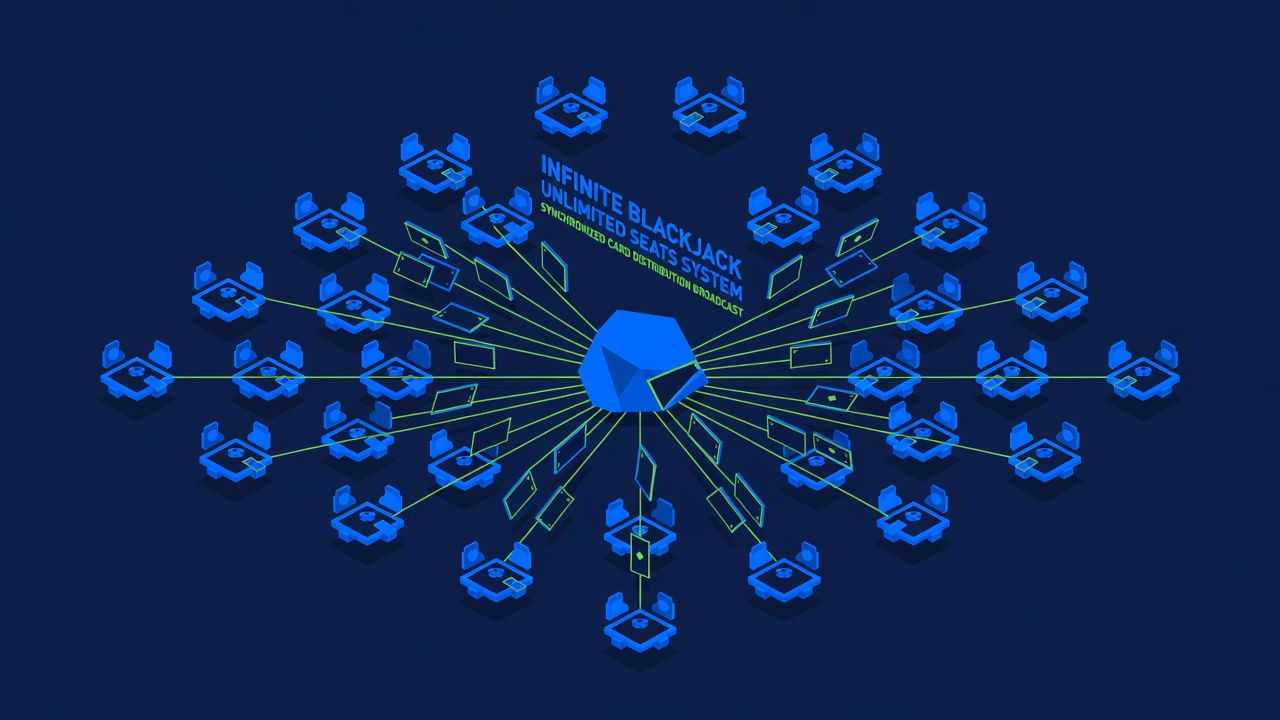
Infinite Blackjack is broadcast live from a studio. A dealer sits at a table. The players log in to their casino accounts from anywhere in the world.
The dealer deals two cards face-up. Every player at their computer receives the same two cards. Every player sees their options: hit, stand, double, split.
You place your bet. The dealer hits. Everyone sees the same next card. The hand resolves. Everyone either wins or loses on the same outcome.
There is one hand. One dealer. One outcome. But unlimited players simultaneously.
Round 2: The Math
From a math standpoint, nothing changes. The dealer busts 28 percent of the time. You double down on 11 and the dealer plays standard rules. The house edge is identical to regular blackjack.
But the practical effect is strange. You are playing alongside potentially thousands of other people on the exact same hand. Your decision is yours, but the outcome is the same outcome that everyone else either wins or loses.
Round 3: Why It Matters to Casinos
Table space is expensive. Dealers are expensive. Live streams are cheap once the infrastructure is built.
A single Infinite Blackjack table can serve 100 players simultaneously with almost zero additional cost per player. The dealer is dealing one hand. The stream is one broadcast. The math scales without adding overhead.
A casino that used to run 20 blackjack tables can now run 5 Infinite tables and serve 10 times the players.
Round 4: Why It Matters to Players
The game is interesting because it is different. You have complete independence in decisions (you can hit when others stand) but shared outcomes (you win or lose on the same hand).
Some people love it. Some people hate it. The ones who love it are usually happy to have access to blackjack when the regular tables are full.
Round 5: The Weirdness
What I cannot explain is why it feels slightly unreal. You are playing against a dealer. You are making decisions. But thousands of strangers are making opposite decisions on the same hand.
When the dealer busts and everyone wins, there is no thrill of beating the dealer. There is just a collective outcome.
When you hit a soft 18 and the dealer shows a 6, and the next card is a King, and everyone busts, you feel like you made a personal mistake, but so did everyone else simultaneously.
It is mathematically identical to regular blackjack but psychologically different. The absence of social feedback (other players at your table) creates a different experience.
Round 6: The Future
Infinite Blackjack works because blackjack is simple enough that simultaneity does not ruin it. Poker would never work this way because poker is about hidden information.
But for table games where the outcome is determined by dealer mechanics and your decisions are independent, infinite tables will probably expand.
More players. Fewer tables. Lower costs. Same math.
The casino wins in the same way. The only thing that changes is the scale and the feeling of playing alone in a room with thousands of people, all playing the same hand against the same dealer.