How to Verify a Poker Site's Legitimacy Before Depositing
I lost money to a site that turned out to be operating without a real license. Not a lot of money, not the worst thing that happened to me during those years, but it was entirely avoidable. Here is what I check now before I put a dollar anywhere.
The deal
There was a period when I would deposit money at any site that had a clean homepage and a live chat button. I won't say how long that period lasted. Long enough. The tells were there, I just didn't know what they meant yet.
One site I used for about three months in 2017 processed my deposits instantly and took about a week to return a withdrawal request, and then another week, and then the support emails started bouncing. The license it advertised, a Curaçao number, turned out to belong to a master license holder I'd never heard of. The master license holder's website had last been updated in 2014.
I got most of my money back eventually. Not all of it. That experience changed how I approach this.
Round 1: Start with the License Number
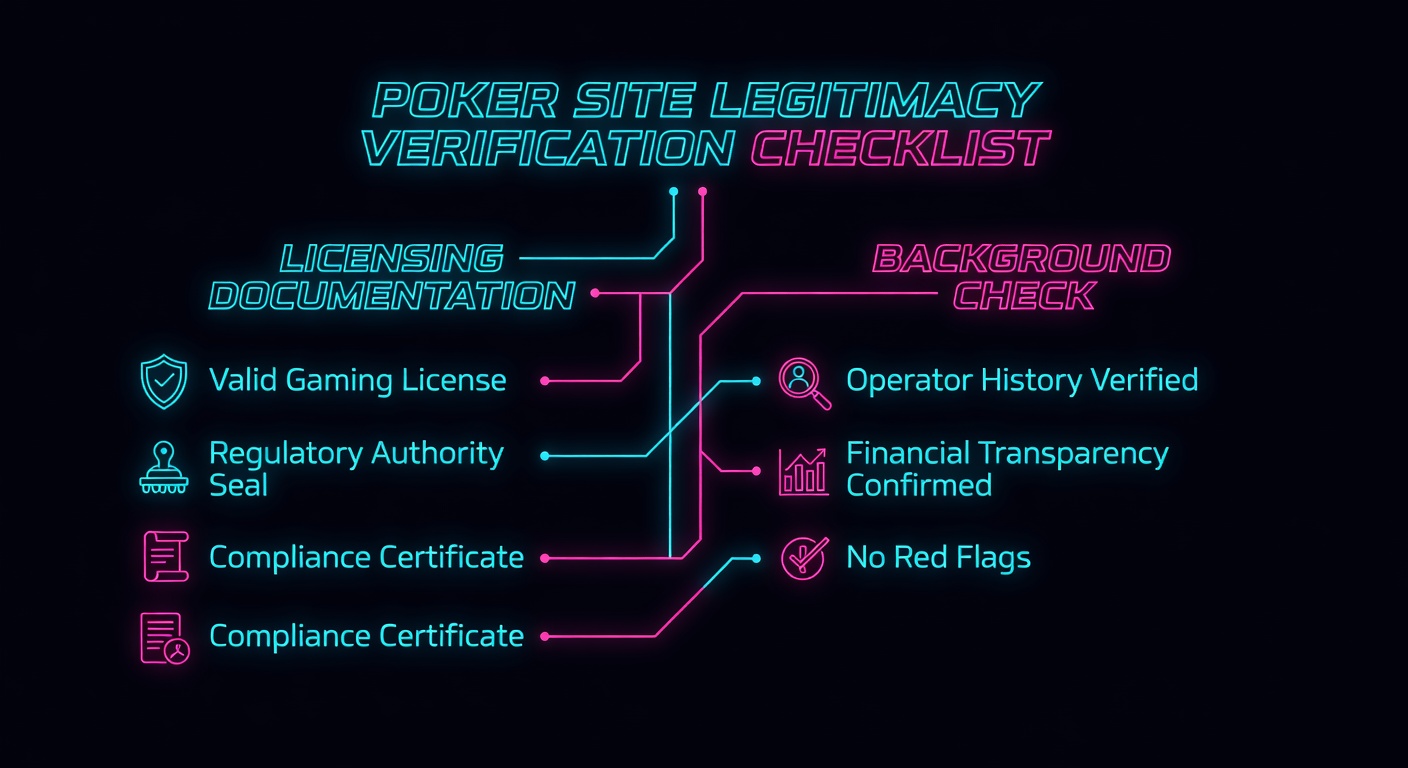
Every legitimate site publishes its license number in the footer. The first thing I do is take that number and check it directly against the regulator's database, not the site's claims about the regulator.
The Malta Gaming Authority has a searchable public register at mga.org.mt. The UK Gambling Commission's register is at gamblingcommission.gov.uk. Both are updated frequently and list each license's current status, any conditions, and any sanctions. If the site says it's MGA-licensed but the number doesn't appear in that register, stop.
Curaçao licenses are harder to verify since the reform in 2024, but the Gaming Control Board of Curaçao now maintains a register at gcb.cw. Older sublicenses under the master license system may not appear there cleanly. That ambiguity is itself information.
A UKGC license is the strongest signal of legitimacy for UK players. The commission runs regular audits, issues substantial fines for AML and social responsibility failures, and publishes enforcement actions publicly. When Betway paid 11.6 million pounds in 2021, the UKGC's enforcement notice was public record. That transparency is what you're trusting when you trust the license.
Round 2: Check for Certified RNG and RTP
Poker is a different animal from slots because the outcome of any hand depends on the community cards, not a certified RNG in the same sense. But the shuffler is still software. A legitimate poker site submits its shuffle algorithm to an independent testing laboratory, either eCOGRA, Gaming Laboratories International (GLI), or a comparable body, and publishes the certification.
If you can't find an RNG certification or a link to the testing lab's report anywhere on the site, that's a flag. Not a disqualifying one by itself, but worth noting.
Round 3: Read the Player Forums, Not Just the Reviews
Affiliate review sites have financial relationships with the operators they review. That doesn't make every review dishonest, but it means a five-star review on a site that earns a commission from signups is not independent analysis.
Two4Poker, PokerScout's historical traffic data, and the Two Plus Two player forum threads are less financially entangled. Forum threads about slow withdrawals, unresponsive support, or confiscated funds carry real information. So do patterns: a site with fifteen recent complaints about delayed cashouts is telling you something about operational solvency that the homepage is not.
I look specifically for reports about the withdrawal process. Deposits are always smooth. Withdrawals are where the character of an operator becomes visible.
Round 4: Withdrawal Speed and Method
Before depositing, I read the withdrawal terms carefully. A site that requires five to ten business days to process a withdrawal, where competitors process in twenty-four to forty-eight hours, either has a cash flow problem or a fraud detection process that is creating unnecessary delays. Both are worth knowing about in advance.
Also check whether your preferred withdrawal method is available. Some sites accept deposits via a payment method but don't support withdrawals via the same channel. That asymmetry forces you into a withdrawal method you didn't choose, sometimes one with higher fees or slower processing.
Round 5: KYC Before the Problem, Not After
Know Your Customer verification is mandatory for licensed operators. Some sites allow play before KYC is complete and then freeze withdrawals pending verification when you try to cash out.
I now complete KYC verification before I make a significant deposit, not after. Upload the ID documents, wait for the verification email, confirm the account is cleared. It takes a day or two. If a site resists or delays KYC verification, that's telling. A site that doesn't want to know who you are before taking your money is operating in a way that won't end cleanly.
Round 6: The Basic List
- Verify the license number in the regulator's own database, not on the site
- Confirm RNG certification from eCOGRA, GLI, or an equivalent lab
- Search for the site name on PokerScout, TwoPlusTwo, and Reddit r/poker
- Read the withdrawal terms before depositing, not after
- Complete KYC before making a deposit above your comfort zone
None of this guarantees anything. A site can hold a valid UKGC license and still run a poor poker product with thin traffic and bad software. But the checks above will eliminate most of the serious risk. I wish I had run them in 2017.