Crypto Transactions Stuck: Understanding the Blockchain Hold-Up
A high-limit dealer explains why crypto deposits sometimes freeze and what signals tell you your coins are coming.

The deal
The baccarat table at three in the morning has a language all its own. So does the blockchain. A player squeezes his cards, waits on a tell from the banker. You wait on confirmations, on hash rates, on network congestion. The rituals are different but the principle is identical: patience reading small signs.
When a whale tells you his Bitcoin has gone nowhere for six hours, he is not panicking yet. He knows the house. He knows that money moves through channels, and channels sometimes back up. The transaction is not lost. It is caught between worlds.
Round 1: How Blockchain Confirmations Actually Work
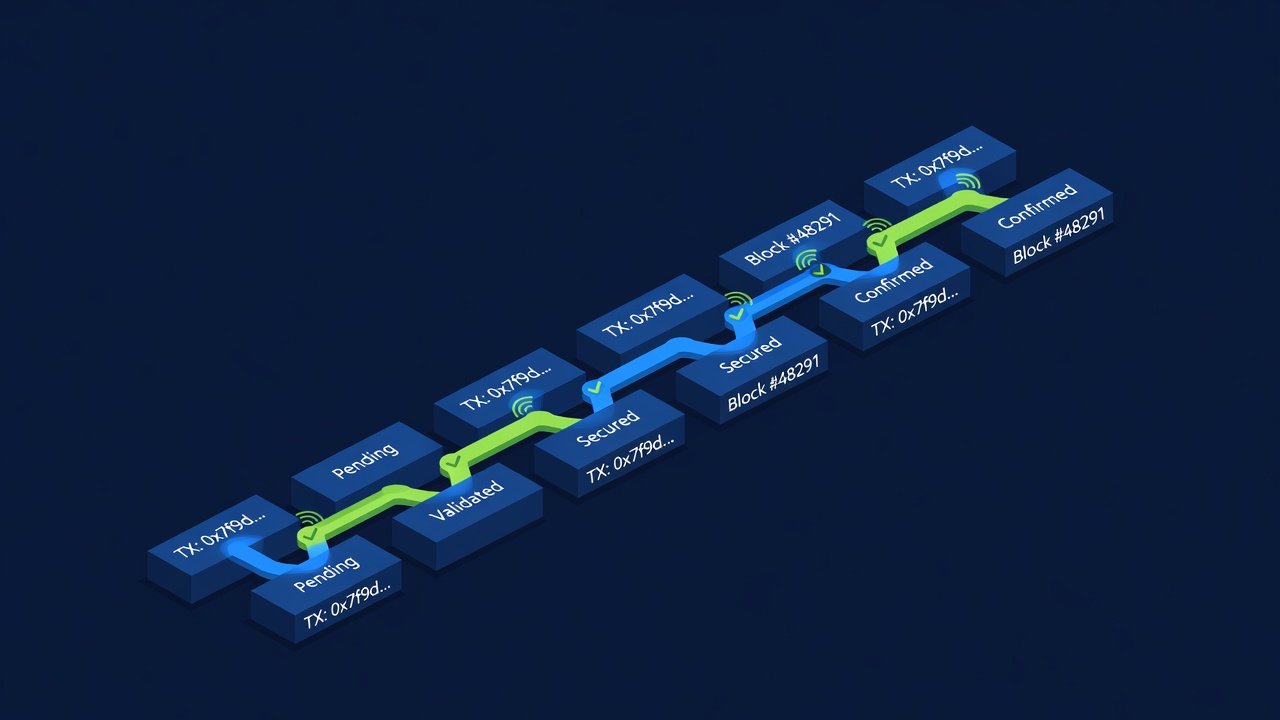
Every Bitcoin transaction sits in a mempool, a waiting room before it enters a block. Miners or validators prioritize by fee. A $5 fee on a $50,000 transfer during peak hours might sit for hours. A $50 fee gets you in the next block. This is not a casino edge, it is pure economics: scarcity pricing on block space.
Once your transaction enters a block, it has one confirmation. Ethereum typically waits for 12 confirmations before the casino credits your account. Bitcoin exchanges wait for six. Some wait for thirty, especially with high-value deposits. Each confirmation adds security, reduces the chance of a fork leaving your transaction orphaned. You are buying certainty with time.
Round 2: The Network Congestion Factor
On a quiet day, a Bitcoin transaction clears in ten minutes. During a bull run, during an exchange hack panic, during any moment when everyone moves money simultaneously, you are competing with millions of transactions. The mempool bloats to five hundred thousand transactions. Fees spike. A wise player waits these moments out. A impatient player pays triple.
The casinos understand this. They watch the on-chain data. They know when to lock down deposits, when to warn you that things will be slow. A good operation tells you upfront: this will take eight hours. A bad one says nothing and lets you sweat.
Round 3: When to Worry and When to Wait
A transaction with zero confirmations after one hour is not dead, it is simply stuck behind others. You can boost the fee using replace-by-fee, a mechanism that bumps your transaction's priority. Most casino wallets support this. Most do not explain it clearly.
Three hours with zero confirmations on Ethereum suggests the gas fee was set too low. The network has moved on. You need to cancel and resubmit with new parameters. This costs a second transaction fee but gets you moving.
The coins are not lost. They exist on the ledger. They are simply staged in a queue, waiting for their turn through the narrow door of block space.
A transaction that shows in blockchain explorers but not in your casino account is a different issue. This usually means the casino's withdrawal system is slow to update. The money is there. The database is catching up.
Round 4: The Institutional Pattern
High-limit rooms at regulated casinos have relationships with institutional payment processors. These processors hold pools of coins, reducing on-chain friction. Your deposit goes to a processor's wallet, then the processor batches many small deposits into one large transaction. You get internal crediting while waiting for that batch to settle. You do not see the blockchain, only the illusion of speed.
Unregulated crypto casinos operate differently. Your coins go directly on-chain. You see the full wait. This is actually more transparent, though it does not feel that way when you are watching the clock.
The lesson is old as cards themselves: movement takes time. A slow game is often a safe game. A player who understands why his Bitcoin has not arrived yet sleeps better than one who does not. The blockchain is not broken when it is slow. It is simply being honest about the cost of security at scale.