Two-Factor Authentication for Casino Accounts: Why It Matters
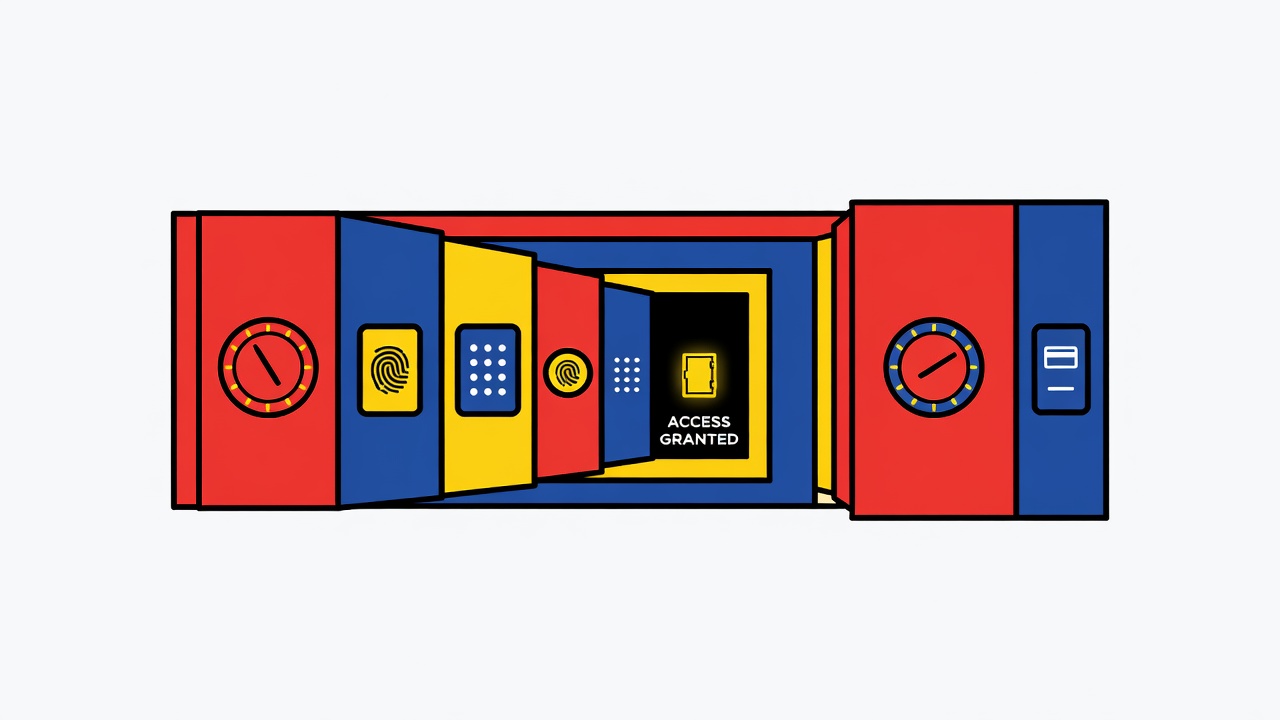
Authentication is traffic flow. Two-factor authentication is a second checkpoint that separates the person who owns the account from everyone else trying to get in. A casino without 2FA is designed to fail.

The deal
When I walk into a casino, I am observing architecture, not gambling. The sightlines are precise. The distances between tables are calibrated. The carpet design pulls your eye toward the high-limit room. These are not accidents. They are the result of decades of studying how people move, where they look, how long they stay. James Rouse, the mall designer, understood this. Chip Wilson, who designed Aria in Las Vegas, understands this. The building is a machine for a specific kind of attention.
Security in a digital casino follows the same principle. The architecture of access determines who gets in and who stays out. Two-factor authentication is one structural element in that architecture, and it is non-negotiable.
One-factor authentication (username and password) is a single checkpoint. A person arrives at the door, says their name, provides a password. If both are correct, they are admitted. The problem is obvious: if someone learns your username and password, they walk through the door as if they were you. The compromise is complete.
Round 1: How Two-Factor Works
Two-factor authentication adds a second checkpoint. After you provide your username and password, the system demands a second form of verification. This second factor is something you have (a phone with an authenticator app, a text message with a time-limited code, a hardware key like a Yubikey) or something you are (a fingerprint, a face scan, an iris scan).
The attacker who steals your password now hits the first checkpoint successfully but fails at the second. They do not have your phone. They do not have your authenticator app. They cannot complete the login sequence.
The time-limited code is the most common implementation. You receive a six-digit code via text message or generate one using an app like Google Authenticator. This code is valid for roughly 30 seconds. After 30 seconds, a new code is generated. The attacker would need to intercept this code in real time, which is orders of magnitude more difficult than stealing a password.
Round 2: App-Based vs SMS-Based
SMS-based two-factor is standard at most casinos. It works: you provide your username and password, then receive a code via text. The problem is that SMS can be intercepted via SIM-swap attacks. An attacker contacts your mobile provider and convinces them that the attacker's SIM card is the legitimate SIM for your phone number. Messages are then routed to the attacker's phone. This is rare, but it happens, and it is devastating because all your account recovery is now in the attacker's hands.
App-based authentication (Google Authenticator, Authy, Microsoft Authenticator) is stronger. The codes are generated locally on your phone using a cryptographic algorithm, not sent via SMS. This means an attacker cannot intercept the code in transit because there is no transit. The code is only ever displayed on your device.
The best casinos offer app-based 2FA as an option. Licensed operators (DraftKings, FanDuel, Bet365, Stake) all support authenticator apps. If your casino does not, ask why. If they refuse, that is a sign of architectural sloppiness elsewhere.
Round 3: Backup Codes
A strong 2FA system also provides backup codes. These are one-time use codes, usually 8-10 characters, that you generate and store securely when you enable 2FA. If you lose your phone or lock yourself out of your authenticator app, these backup codes let you regain access without losing your account entirely.
The security principle is straightforward: having two factors is useless if losing one factor means you lose access forever. Backup codes are a third layer of protection, and they should be stored somewhere secure and separate from your phone and your casino account. A password manager like 1Password or KeePassXC is ideal. A piece of paper in a locked drawer is acceptable. Writing it on a sticky note on your monitor is not.
Round 4: The Cascade Effect
Two-factor authentication is a structural choice that cascades through the entire security architecture of a casino. If the casino uses 2FA, they are signaling that they take access control seriously. This usually correlates with other smart choices: strong password-change policies, account-recovery procedures that verify your identity, transaction approval systems that require additional confirmation for large withdrawals.
Casinos that do not offer 2FA are operating under an older security model. They are relying on passwords alone and trusting that users will choose strong passwords and not reuse them. This is architectural negligence. It is like designing a casino with one entrance and no security checkpoint and hoping people do not try to cheat.
Round 5: What You Should Do
If your casino offers two-factor authentication, enable it immediately. Choose the app-based option if it is available. Generate and securely store your backup codes. Review your login activity regularly to check for unauthorized access attempts.
If your casino does not offer 2FA, that is a red flag. Not a disqualifying one; many legitimate casinos have not upgraded their authentication systems. But it is something to consider when evaluating whether to store significant money in that account. The question is not whether you trust the casino's intentions. The question is whether you trust their architecture to protect you from attackers who do not have those intentions.
Security is not a luxury feature. It is a structural necessity.