Sweden's Spelinspektionen: An Introduction
Sweden re-regulated its gambling market in January 2019 and handed the keys to a new watchdog called Spelinspektionen. What the agency has done since then tells you something about what it means when a government decides it actually wants to run this thing properly.
The deal
There is a man named Per Johansson, and he has been the Director General of Spelinspektionen since the agency opened its doors in January 2019. He does not get written about much outside of Swedish trade publications. But the things that have happened under his watch, the fines, the suspensions, the court battles, amount to something worth understanding.
Swedin had a gambling market before 2019. Everybody knew it. ATG ran the horse racing. Svenska Spel ran the casino and the lottery. And a few hundred offshore operators took Swedish kronor over the internet in a grey zone that nobody much wanted to police. Estimates from that period put unregulated online gambling in Sweden at somewhere between 35 and 40 percent of total market revenue. The Swedish government called it channelisation failure and decided to fix it.
Round 1: What Spelinspektionen Actually Does
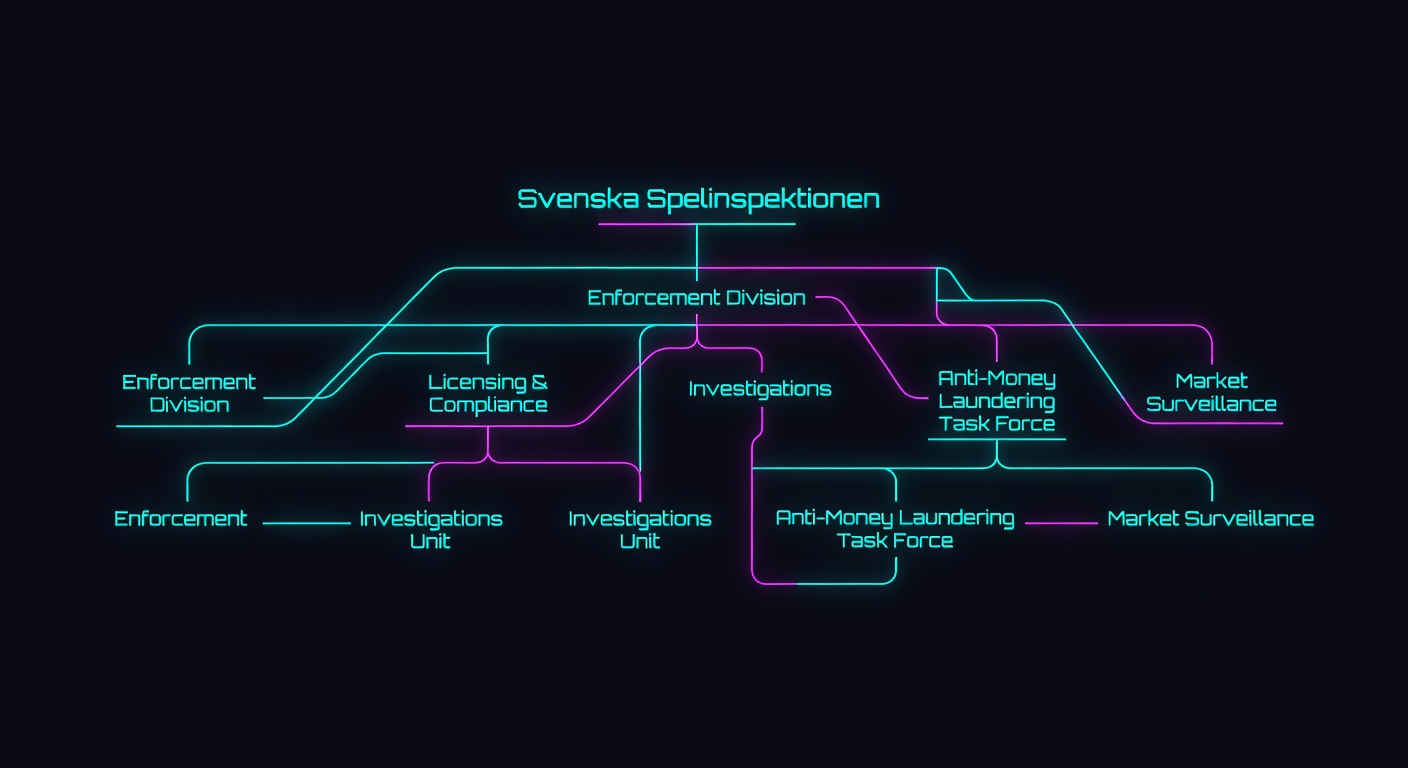
The agency is the successor to Lotteriinspektionen, a body that spent decades regulating what was essentially a state monopoly. Spelinspektionen inherited the building and some of the staff, but it got a fundamentally different job. Instead of protecting a monopoly, it licenses and supervises a competitive market.
As of 2024, Spelinspektionen has issued licences to roughly 90 operators and 50 software suppliers. Each licence costs the operator 700,000 Swedish kronor in fees per year and carries a long list of obligations: responsible gambling tools including self-exclusion through Spelpaus, advertising restrictions, KYC requirements, AML reporting to the Swedish Financial Intelligence Unit, and quarterly reporting on gross gaming revenue.
The advertising rules are among the strictest in Europe. Gambling operators in Sweden are permitted to advertise only during "moderate" periods, a term defined in the Gambling Act as excluding times when vulnerable populations are likely to be watching. Bonuses are tightly restricted. A welcome offer must be genuinely available only once. The phrase "bonus" itself triggers additional scrutiny about whether the offer could appeal to problem gamblers.
Breaking these rules has consequences. Betsson was fined 50 million kronor in 2020 for marketing violations and bonus abuses. LeoVegas took a 6 million kronor fine in the same year for insufficient responsible gambling controls. These are not symbolic penalties against companies that turn over hundreds of millions annually, but they were delivered within eighteen months of the market opening, which sent a signal that the regulator meant to be taken seriously.
Round 2: The Channelisation Problem Has Not Gone Away
The original goal was to capture the grey market by making legal operators competitive on price and product while imposing just enough friction on unlicensed operators to drive customers toward the licensed channel. Spelinspektionen's own reports show the channelisation rate has improved since 2019, reaching approximately 87 percent of online gambling revenue in licensed hands by 2022.
But unlicensed operators still operate. Affiliate sites that carry Swedish traffic to unlicensed books continue to function despite Spelinspektionen having no direct authority over them. The agency can issue warnings and publish blacklists. It cannot reach offshore servers in Curacao or Malta acting without a bilateral enforcement agreement.
This is a structural limitation that Per Johansson has spoken about publicly on several occasions. The regulator can control what happens inside its jurisdiction. It cannot easily control what Swedish bettors choose to do outside it, especially when offshore operators deliberately target Swedish players while claiming to operate in markets where Swedish gambling law does not apply.
Round 3: What the Model Shows
Spelinspektionen is not a perfect regulator. Its complaints process is slow. Its responsible gambling framework has been criticised for not going far enough on deposit limits. A 2021 government inquiry suggested the agency was under-resourced relative to the size of market it was supposed to supervise.
But the model is real. A country that had a chaotic mixed market in 2018 now has a functioning competitive licence system with documented operator obligations, enforceable advertising standards, and a centralised self-exclusion register. Spelpaus had processed nearly 90,000 active self-exclusions by mid-2023.
Ninety thousand people who told a register they needed to stop, and the register listened. That is not nothing. You do not get a number like that without a regulator willing to build and mandate the infrastructure. Spelinspektionen built it.