How Session Timeouts Protect Casino Players
A session timeout is a forced logout. You are sitting at a virtual table with money in play, and suddenly you are bounced. Sounds annoying. But it saves people from themselves.
The deal
Right, so I ran a book for forty-three years in London. Small operation, nothing fancy. Street-level stuff. We had a rule: if someone looked like they were in a losing spiral, we would send them home. Not aggressive, just a gentle "Come back tomorrow, yeah?" Sometimes they hated us for it. Most came back the next day grateful.
Session timeouts in online casinos are that principle in technical form. You are sitting at a table, playing live blackjack, and after thirty minutes of inactivity, you are logged out. Your session ends. You cannot place a bet unless you log in again.
Sound annoying? It is supposed to be.
The psychology of gambling in a physical casino is different from online. In a physical casino, you are aware of time passing in a bodily way. You get thirsty. You need the toilet. The light changes. You feel the chair under you. These are external brakes that force small breaks in play. You stand up, walk around, reset. You might notice you have lost more than you intended.
Online, there are no brakes. You can sit for eight hours in the same chair, with a bathroom ten feet away, surrounded by distractions (your phone, your laptop, your television) that feel distinct from gambling. Time collapses. You lose track of how long you have been playing and how much money has left your account.
Round 1: The Mechanism
A session timeout is a forced break. After a set period of inactivity (usually 15 to 30 minutes, depending on the casino), the system logs you out. When you try to place another bet, you are redirected to login. You have to re-enter your username and password. This tiny friction is enormous psychologically.
In those 30 seconds while you are logging back in, your brain resets. You check the time. You realize you have been sitting for five hours. You notice your coffee is cold. You remember that you had planned to stop an hour ago. That moment of re-authentication is a circuit-breaker.
Round 2: Why It Works
Behavioral economics has documented extensively what is called the "flow state" in gambling. Once you are inside the flow (consistent pacing, immediate feedback, clear objectives, minimal friction), you lose track of external reality. You are not thinking about time or money. You are thinking about the next hand. This is exactly what the casino wants from you.
Session timeouts interrupt the flow state. They do not eliminate the desire to gamble (they cannot), but they introduce decision points. After logout, the player has to ask: "Do I actually want to log back in, or am I tired?"
Research on gambling harm reduction (Gainsbury, Blaszczynski, and Wood, 2012) found that mandatory time-outs reduced time spent gambling by an average of 12% and reduced the intensity of play (average bet size) as well. They did not prevent people from gambling; they prevented people from gambling in a hypnotic state.
Round 3: The Business Trade-off
Here is the tension: a casino does not want session timeouts. Session timeouts interrupt play and reduce the amount of money wagered per session. A casino wants you to lose money, and the longer you play in an uninterrupted flow state, the more money you are likely to lose.
But regulated casinos (those licensed by the UKGC, the MGA, the New Jersey Division of Gaming Enforcement) have to implement session timeouts as part of their harm-reduction requirements. It is a condition of their license. They do not implement it because it is good for players; they implement it because the regulator requires it.
Unlicensed casinos (offshore operations, crypto casinos without regulatory oversight) do not implement session timeouts because they have no reason to. There is no regulator forcing them. They are optimizing purely for revenue extraction.
Round 4: What Good Looks Like
A good session timeout system has these features:
-
It applies to all game types, not just slots. Live casino tables should have the same timeout as other games.
-
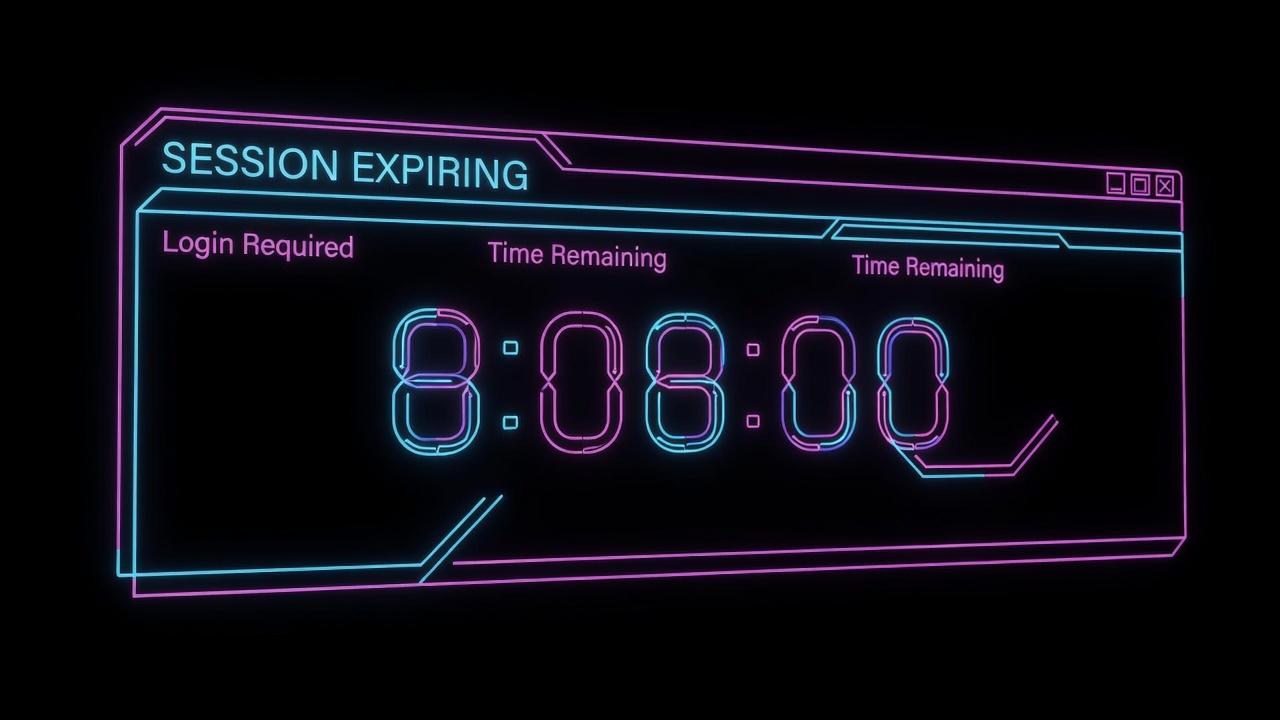
It is transparent. The player can see on the screen: "You will be logged out in 5 minutes due to inactivity." There is a countdown.
-
It allows the player to extend the session if they actively choose to (by clicking a button), but it requires a deliberate action, not a passive acceptance.
-
It is set to a reasonable duration. 15 minutes is too aggressive for a player in the middle of a live poker session. 120 minutes is too long to provide any real break. 30 minutes is the sweet spot.
Round 5: The Limitation
Session timeouts are not a solution to problem gambling. They are a harm-reduction tool. A player who wants to gamble for hours can log back in after the timeout and keep playing. The system cannot prevent that. What it can do is interrupt the hypnotic state and give the brain a moment to reassess.
I used to tell people: "The house is patient. The house does not need you tonight. The house will be here tomorrow." Session timeouts are that principle encoded in software. They are saying: "Pausing is an option."
Some people will ignore that option. But some will not. And for those people, that thirty-second login interruption might be the difference between a losing night and a night they walked away from before things got bad.