The Ritz Club London Laser Roulette Scandal
The Ritz Club scandal was not about a game being rigged. It was about information asymmetry. Three players used a hidden device to read wheel behavior. The marketing lesson: if someone is describing themselves as using "advanced physics techniques," they are probably cheating.
The deal
In 2004, three men walked into the Ritz Club in London's Mayfair and proceeded to win approximately 1.2 million pounds at the roulette wheel over several weeks. The casino, initially, did not care. High rollers win sometimes. This is the math of roulette: variance is enormous. Lucky streaks happen.
But the casino's surveillance team noticed something. The three players were placing bets right up to the moment the croupier called "no more bets," and they were placing them with unusual precision. They knew, or appeared to know, which sector of the wheel the ball was going to land in. The pattern was too consistent to be luck.
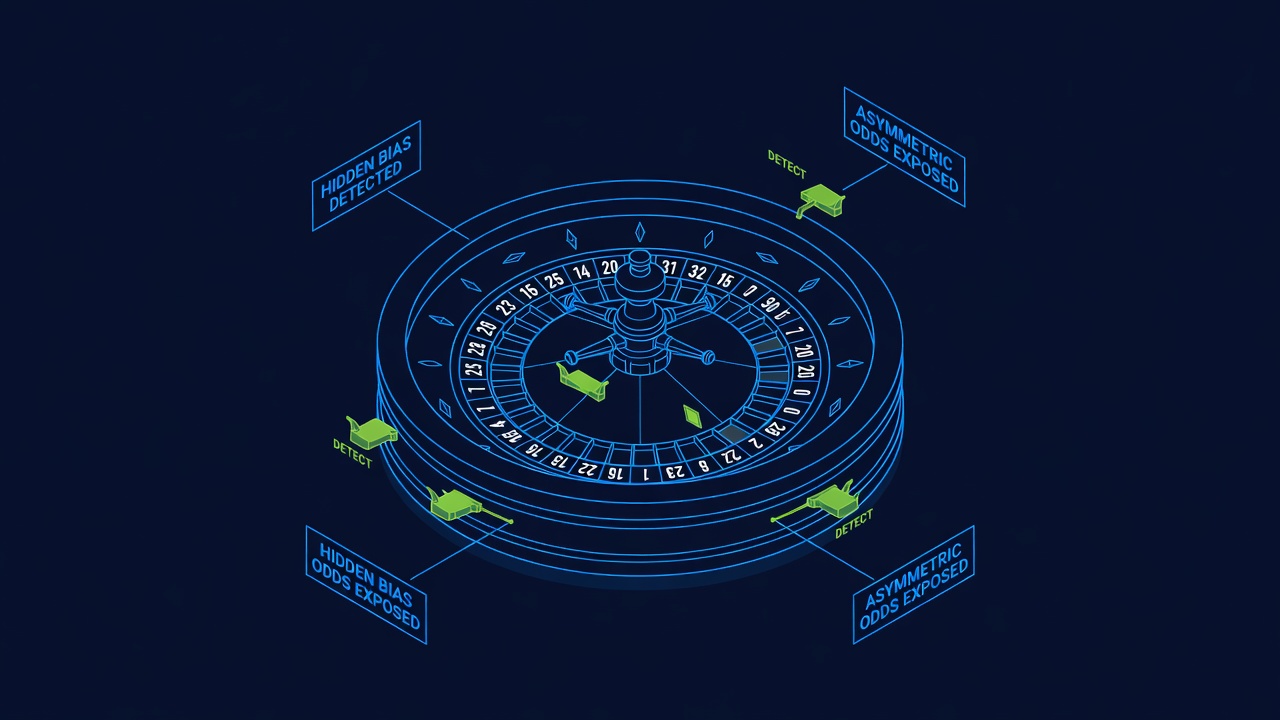
The subsequent investigation revealed the mechanism: a tiny computer (approximately the size of a lighter) hidden in a shoe was predicting the ball's trajectory based on the ball's initial velocity and the wheel's speed. The device was manufactured from components purchased at electronics suppliers. The cost was negligible. The accuracy was enough to create a measurable edge.
Round 1: The Marketing Translation
Here is where I have to switch hats and read this like a marketing person who has spent years reverse-engineering casino bonus pages. The marketing-speak around the Ritz scandal says: "The players exploited a loophole in the game's physics." What it actually means is: "The players had information that the casino did not." This is every scam ever. The power asymmetry comes from hidden knowledge.
When a casino advertises a bonus that says "wager 35x the bonus amount," that is marketing language for: "You will lose this money statistically." When a bonus says "winnings are cashable immediately," what it actually says is: "We have already accounted for the probability that you will win and lose it in the same session." When a casino says "progressive jackpots reach $10 million," it means: "We will build a jackpot so large that people will bet badly trying to chase it."
The Ritz players translated the physicality of the roulette wheel into information the casino did not want them to have. That information created a temporary advantage. The casino's response was not to improve security; it was to change the rules of roulette: European casinos began banning betting after the wheel has spun. The Ritz itself raised the minimum bet on roulette, which reduced the precise betting that had revealed the players' technique.
Round 2: What Actually Happened
The three men (Yugal Anorak, Somen Roy, and another player) used a device that measured the ball's velocity relative to the wheel's velocity. A simple physics problem: if the ball leaves the wheel at a certain speed, and the wheel is rotating at a certain speed, basic physics can predict (with rough accuracy) which quarter-section of the wheel the ball will land near. The croupier calling "no more bets" is supposed to happen before the wheel has slowed enough for prediction to be accurate. By calling it later than usual, the casino allowed the calculation to occur.
The casino initially sued the players to recover the money. The courts ruled in favor of the players because the device was passive (it measured, it did not manipulate the wheel mechanically) and because the casino had created the opportunity by allowing betting after the relevant information became knowable. The casino lost. The players kept the money.
Round 3: The Larger Principle
Roulette is supposed to be a pure game of chance. The marketing says: "No skill, just luck." The Ritz scandal proved that statement was false: if you have information (the ball's velocity), you have skill (physics). If you have skill, you have an edge. The casino's response was not to acknowledge the edge but to change the rules to prevent the information from being generated.
This is the casino's marketing strategy in miniature. When a game can be beaten, the casino either changes the rules or bans the player. When a bonus can be beaten through analysis, the casino adds new terms. When a payment method can be exploited, the casino restricts it. The marketing stays constant ("fair games, great bonuses") while the actual terms shift to protect the house.
The Ritz scandal is notable because it illustrates the opposite: three players found information, used it skillfully, and walked away before the casino could adapt. Most people who try this lose. These three won.