Biased Wheel Analysis: A Brief History of Roulette Advantage Play
A roulette wheel is supposed to be perfectly random. But physical wheels wear unevenly. A wheel is a machine, and machines can be analyzed. That is how advantage play began.
The deal
I have played bingo for forty years. I play twice a week, Tuesday and Friday. I have won maybe thirty times, lost maybe three thousand times. I do the math. The house edge is probably four or five percent. I have paid three or four hundred dollars a year to have a reason to sit with people and feel the little thrill when a number is called.
I do not expect to win. But I have noticed something. Sometimes the numbers seem to come in clusters. Sometimes a particular ball is called more than others.
I mentioned this to a gentleman who plays roulette. He smiled and told me that someone had once made a lot of money noticing the same thing at a casino.
Round 1: The Wheel
A roulette wheel is a machine. It has pockets, a ball, a rotor. The ball is dropped onto the rotor, it bounces, it lands in a pocket. The outcome should be random.
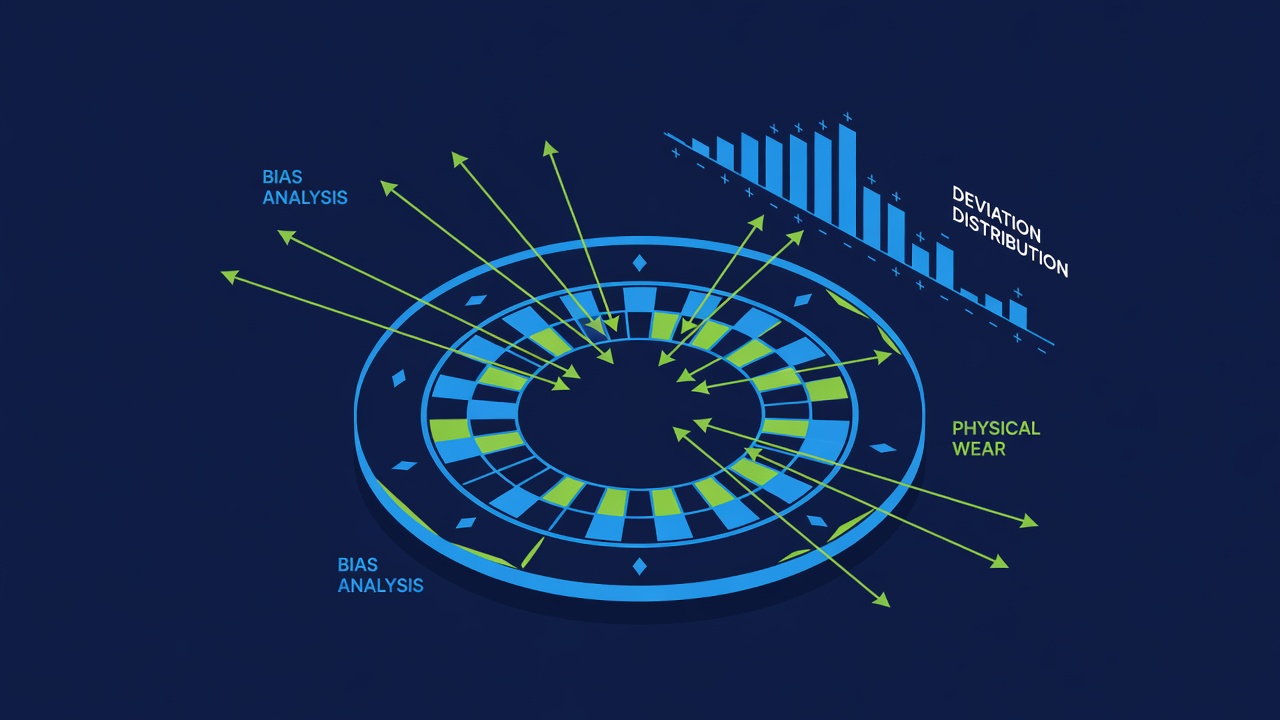
But a machine has tolerances. A wheel can be slightly tilted. The pockets can wear unevenly. The ball can be weighted differently. A tiny tilt that you cannot see with your eyes can affect which pocket the ball lands in.
This is "wheel bias." Some pockets come up more frequently than random probability would predict.
Round 2: The Advantage Players
In the 1970s and 1980s, professional advantage players figured this out. They would sit at a roulette table for hours, tracking where the ball landed. Thousands of spins. They would identify biased numbers, pockets that came up too frequently.
Then they would bet those numbers. Over time, the bias would generate profit.
The most famous was Gonzalo Garcia-Pelayo, a Spanish music producer who identified a biased wheel at a casino in Madrid in the 1990s. He made millions.
Round 3: Why It Worked
The mathematics is simple. If a wheel has 37 pockets (including zero) and each pocket comes up equally often, each number wins once every 37 spins on average. The payout is 35:1, which gives the house a 2.7 percent edge.
If a biased wheel favors one number, landing on it 1 in 30 times instead of 1 in 37 times, then betting that number becomes positive expected value. You are getting 35:1 odds on something that happens 1 in 30 times.
Round 4: Why It Does Not Work Anymore
Casinos learned about bias. They began inspecting wheels regularly. They replaced wheels that showed bias. They installed computer-monitored wheels that flagged unusual patterns.
A modern casino wheel is essentially a precision instrument. It is maintained constantly. Biases are detected and corrected.
Additionally, tracking wheels became noticeably. A person sitting at a roulette table for hours every day, taking notes, became something casino security watched for.
Round 5: The Lesson
What I admire about the people who found wheel bias is that they treated the wheel as a system to be analyzed. They did not accept that the wheel was random. They collected data. They found patterns.
This is how you find edge in anything: you observe systems, you record data, you identify patterns that diverge from expectation.
In modern casinos, you will not find edge in roulette wheels. But the principle remains: edge comes from finding something the market has missed or mispriced.
I have not found an advantage in bingo. But I have found a reason to play that is defensible. I spend money for an experience, and I accept the math. That is better than pretending I might win.