Pot-Limit Omaha Starting Hands You Should Never Fold
In PLO, four-card hands are exponentially more valuable than in Texas Hold'em. A double-suited connector with one gap (AKQJ double-suited) is fundamentally different from AQ offsuit. You need to understand the hierarchy.
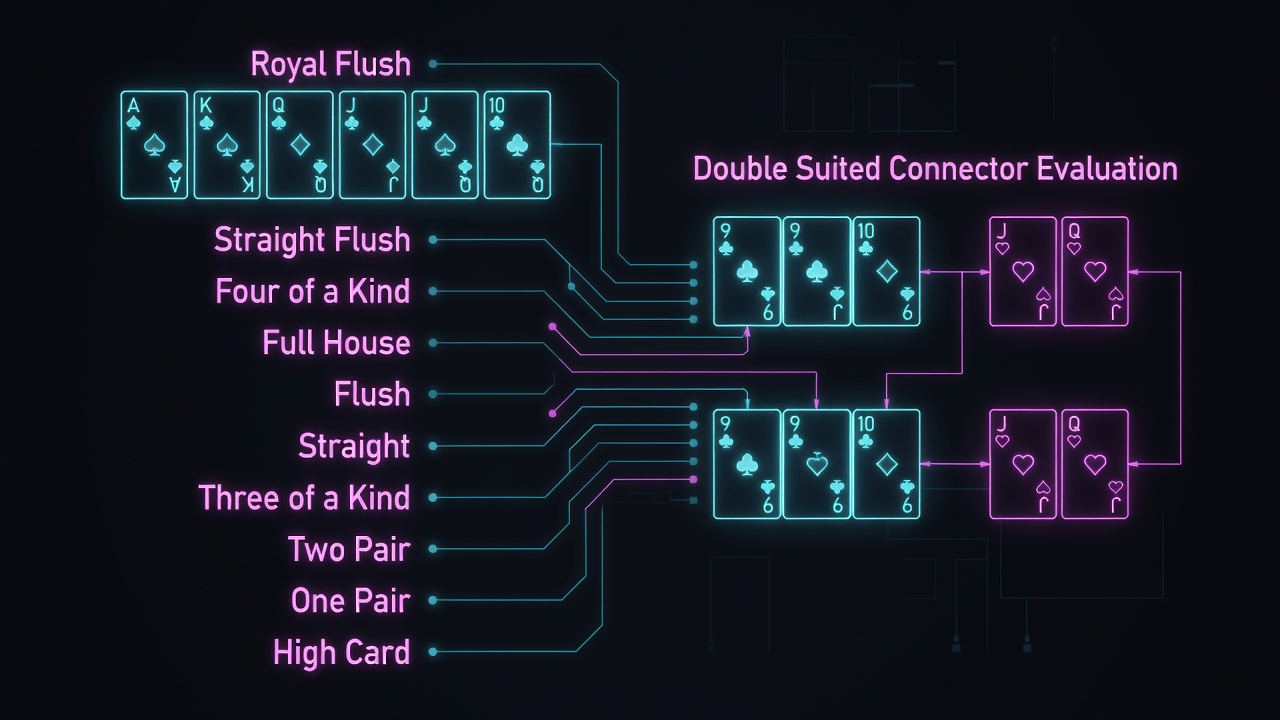
The deal
Pot-Limit Omaha is a game where position matters more than Hold'em and starting hands matter less in absolute terms but more in specific values. You get four cards instead of two. The math changes entirely.
In Texas Hold'em, AK is often an auto-fold in early position under certain circumstances. In PLO, getting AK of any description is actually quite weak. You need connectivity. You need suits. You need ways to make multiple strong hands.
Round 1: Premium Hands: Always Play
Double-suited broadway combinations are the apex tier in PLO. AKQJ double-suited (meaning two cards of one suit, two of another) is the best possible hand. AKQT double-suited is nearly as strong. KQJ T double-suited is premium.
Why? Because you have 16 outs to the best possible hand (the nuts) on most flops. You have two flush draws. You have straight draws. You have overcards. The hand generates equity against anything.
A hand like AKQJ with no suits (rainbow) is genuinely weak by PLO standards. Yes, it is broadway. No, you do not want to play it for full stacks. The lack of suits means you are drawing to one-out situations constantly.
Round 2: Strong Hands: Position Dependent
High pairs with connectivity play well from any position if they have two suits. AAKQ double-suited is a monster. AA29 is a disaster even in the button.
The rule is simple: high cards without suits are weak. High cards with suits and connectivity are strong. A pair plus three cards to a big straight is valuable. A pair plus three cards that do not connect is a fold.
Round 3: The Rundown Hands
Low broadway rundowns like TJTS (ten-jack-ten-nine, for example, though most write these combinations differently) are surprisingly strong. The reason: you have multiple ways to make the best hand. You are not depending on one sequence.
The key metric in PLO is not the hand's absolute ranking but its flexibility. Can this hand make multiple strong hands on multiple board textures? If yes, it is probably worth seeing a flop in position. If no, it is a fold.
Round 4: The Catastrophic Hands to Avoid
Four cards with zero connectivity and no flush possibility is a fold from anywhere. AKTS rainbow is unplayable. 22XX is unplayable unless that XX adds massive straight potential.
The most important truth in PLO: this is a game where you are often drawing to specific nut combinations. You are not just making "the best hand." You are making the nuts or nothing. A hand that does not have nut-draw potential is costing money in the long run.
Round 5: The Position Adjustment
In early position, you want hands that are premium or very close to it. In the cutoff or button, you can loosen considerably. A hand like KQJ9 double-suited is nearly unplayable from UTG but potentially acceptable from the button.
The reason is simple: in early position, you are going to face aggression. Your hand needs to be strong enough to win without improving. On the button, you can fold away 80 percent of hands and still have enough profit opportunity.
Round 6: Reading Your Opponents
Once you know these basics, the real learning begins: how do your specific opponents play these hands? Some grinders understand the nut-draw concept and fold mercilessly. Some casinos have players who will call you down with any pair.
That difference is worth more than any single piece of position or starting hand advice. The best hand is the hand your opponent thinks is worse than yours.