How to Play Pocket Aces Without Getting Crushed
Aces are the best hand you will ever hold. They are also the most misplayed hand because people get emotional about them. The trap is expecting them to win big.
The deal
The spatial design of a casino poker room is actually about managing table selection. Players drift toward tables where they think they have an edge. Understanding this flow, the architect can position medium-stakes games in naturally high-traffic areas and high-stakes games in corners, creating a subtle hierarchy that feels natural but is carefully planned.
But let's talk about aces, which is actually a form of game design. Aces are positioned as the best hand. The design is not to help you win with them. The design is to make you want to win with them.
Round 1: The Architecture of Hand Strength
Pocket aces are about 80 percent to win against a random hand preflop. But poker is not played against random hands. It is played against selected hands. Your opponent only plays a fraction of possible combinations. Against that narrowed range, your aces are much stronger.
However, the distribution of your wins is compressed. You win most hands quickly and for small pots. You lose occasionally but for large pots. The math still favors you, but the emotional impact is backward.
A hand like king-queen can build bigger pots. A hand like a small pair can hit a set and extract value from your aces. The design of poker is such that the hands that "should" lose sometimes create bigger swings.
Round 2: The Play Pattern
In position, aces are nearly always worth a standard raise. In early position at a tight table, a simple 3x raise is reasonable. This thins the field, which is exactly what you want. Aces play well in pots with two or three opponents, worse in pots with six.
Out of position, the strategy is similar: extract value early and build pots against narrow ranges. A larger raise might scare away hands you would beat. A smaller raise might attract hands you would dominate.
The architectural principle: build the structure (the bet) to filter players (smaller pots with those who fold, larger pots with those who call and are likely dominated).
Round 3: The Flop Textures
The moment the flop comes, your hand is either still best or it is not. Aces work best on dry flops (low cards, poor texture for draws). Aces work poorly on flops that hit likely opponent ranges.
If you raised 3x from the button with aces and a tight player from the big blind called, the flop came 2-5-8, you have a situation where your aces are likely ahead. You extract value. Simple.
If the flop came K-J-9 with two of one suit, you suddenly have a much more complex decision. Your hand is still likely ahead, but draws are present. The pot is bigger. The value extraction becomes dangerous.
Round 4: The Trap That Architects Know
The real design principle of casino poker is that best hands lose the biggest pots. Why? Because when you have the best hand, you are less likely to fold. When you have a draw, you are more likely to bluff. The bluff is cheaper because you do not care as much if you get called.
With pocket aces, you want to avoid big pots where you have a draw-heavy opponent. If someone is calling raises aggressively with 8-7 suited, and you have aces, the room design encourages you to build the pot. But this is actually the mistake.
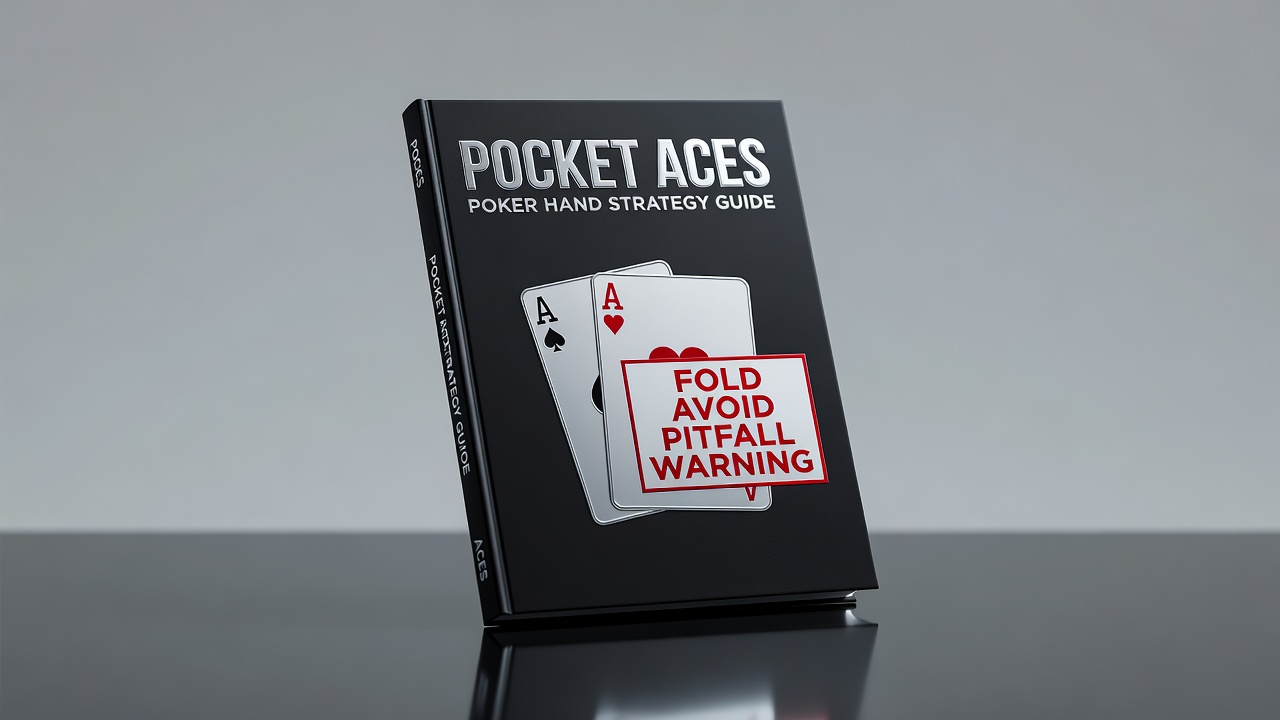
The correct play is often to fold aces to aggressive action when multiple draws are present. This sounds backward. But aces play best in small pots, which is the opposite of what people want to do with them.
Round 5: The Emotional Architecture
Casino designers learned long ago that people want their best things to win big. Slot machines award small hits frequently and jackpots rarely. Poker is the opposite in most hands: best hands win small, worst hands occasionally win huge through variance.
With aces, the emotional expectation is that they win dramatically. The mathematical expectation is that they win moderately. The gap between these creates frustration. You played the hand "correctly" and it won you 50 big blinds instead of 200.
Understanding this design flaw in your own expectations actually makes you a better player. Aces are a tool, not a promise. They build the foundation for small profits across many pots. They are not meant to create dramatic swings. When you accept this design, you can actually extract the maximum value.