Plinko on the Blockchain: How Provably Fair Plinko Works
I spent a lot of time playing games where I had no idea if the outcome was real. Provably fair Plinko is different in a specific, verifiable way. That doesn't mean it's harmless.
The deal
I used to play online slots at 2am and wonder, sometimes between spins, whether any of it was real. Whether the RNG was actually random, whether the house edge was what they claimed, whether I was playing a fair game or being managed by a system I couldn't see. I didn't think about it long. The next spin was right there.
Provably fair Plinko is different in a specific, auditable way. I can tell you exactly how it works. What I can't tell you is that understanding the mechanism will protect you from wanting to keep playing.
Round 1: What "Provably Fair" Actually Means
Q: What is provably fair and why does it exist?
Provably fair is a cryptographic verification method that originated in Bitcoin gambling around 2012 to 2013. It lets players verify that the outcome of any given game round was predetermined fairly, without the casino being able to manipulate it after the fact.
Traditional online casinos are certified by third-party auditors like eCOGRA or iTech Labs, which test game math and RNG quality, but you as a player cannot independently verify any individual game outcome. You trust the certification. With provably fair, the verification is open to anyone with a basic understanding of SHA-256 hash functions.
Q: How does the Plinko version specifically work?
The standard implementation runs like this.
Before a round begins, the casino generates a server seed and hashes it with SHA-256, producing a hash they publish. You provide a client seed, which can be any string, and many platforms let you set your own. A nonce (an incrementing counter) tracks how many rounds have been played with this seed pair.
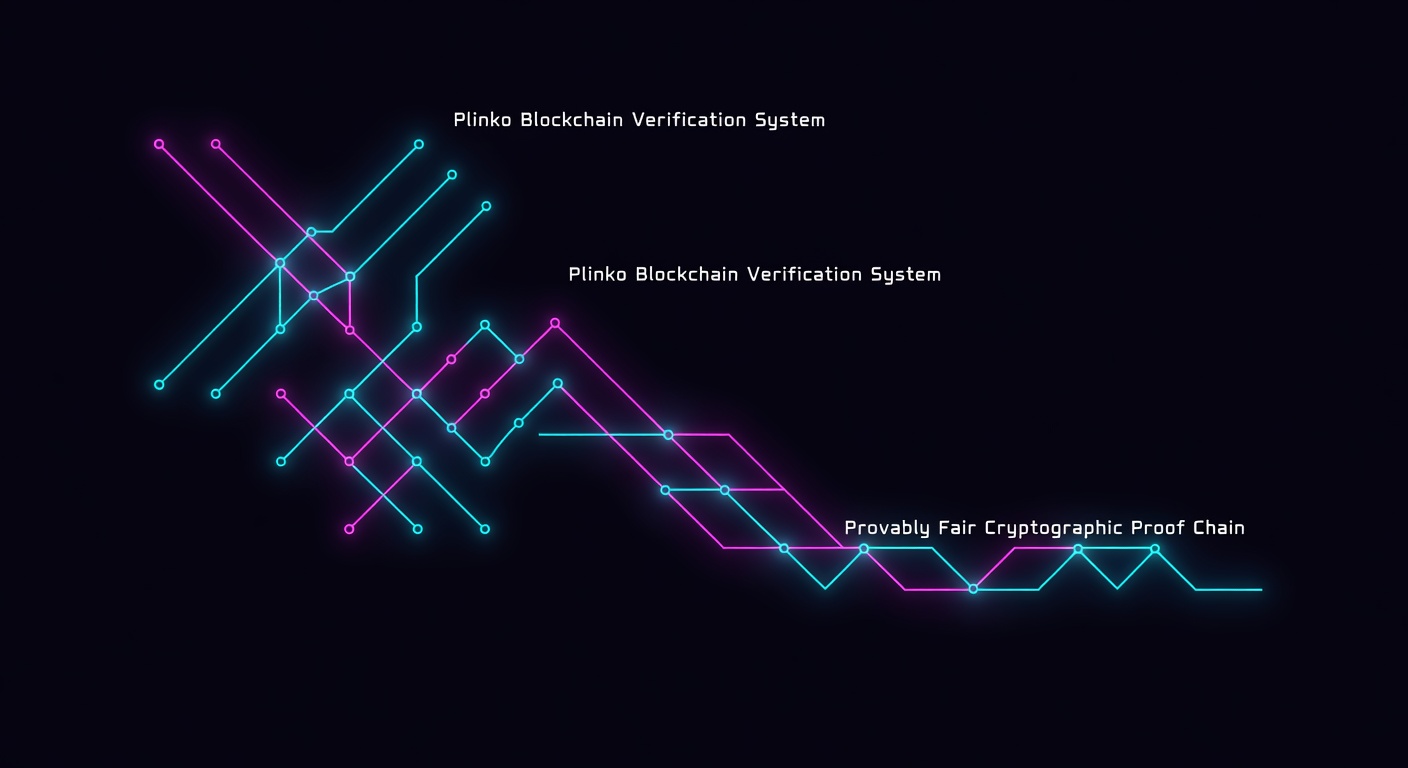
When the Plinko ball drops, the outcome, meaning which peg path it takes and which payout bucket it lands in, is calculated by combining the server seed, client seed, and nonce through the hash function. The result is deterministic. The same inputs always produce the same output.
After the round, the casino reveals the unhashed server seed. You can verify: does SHA-256 of that server seed match the hash they published before the round? If yes, they did not change the seed after seeing your client seed. And if the inputs are unchanged, the outcome was not manipulated.
You can check this yourself. Most provably fair platforms display a verification tool where you paste the seeds and nonce and confirm the result independently.
Q: What does verification actually guarantee?
It guarantees that the casino could not have changed the outcome after you committed your client seed. It does not guarantee that the published house edge is correct. It does not guarantee that the payout buckets are weighted the way the interface suggests. Those are separate claims that require separate verification.
Some platforms publish their complete game logic on-chain or in auditable code. When the full payout distribution is also verifiable, provably fair becomes considerably more powerful. When only the seed commitment is verifiable, you've confirmed the game is unpredictable without confirming it's fair.
Q: Does any of this change how the game feels?
No. I verified a few hundred rounds of a blockchain Plinko game when I was still playing. The verification worked correctly every time I checked. It did not make the losses feel different. The ball still fell in real time, the multipliers still flashed, the near-miss visuals were still designed to suggest that higher-paying buckets were reachable. Knowing the mechanism behind the curtain does not turn off the part of your brain that responds to the presentation in front of it.
That is not a criticism of provably fair as a concept. It is an honest observation about what technical transparency does and does not address.
Q: What should someone considering crypto Plinko actually look for?
Four things matter:
- Verify the published house edge matches what's in the game code, not just what the marketing page claims.
- Check whether the platform holds a license from any recognized regulator. Curaçao eGaming licensing is minimal but present. No licensing at all is a flag.
- Look at withdrawal evidence from real users in forums, not testimonials on the platform site.
- Set a hard session limit before you start, tied to a real number, not a feeling.
The blockchain does not care about any of those things. You have to.