Using VPNs at Crypto Casinos: Risks and Realities
Yes, people use VPNs at crypto casinos. Some get away with it. Some get their withdrawals blocked permanently. Here is what actually happens when you try to access a geo-restricted platform through a masked IP, and why the risk calculus is worse than most people assume.
The deal
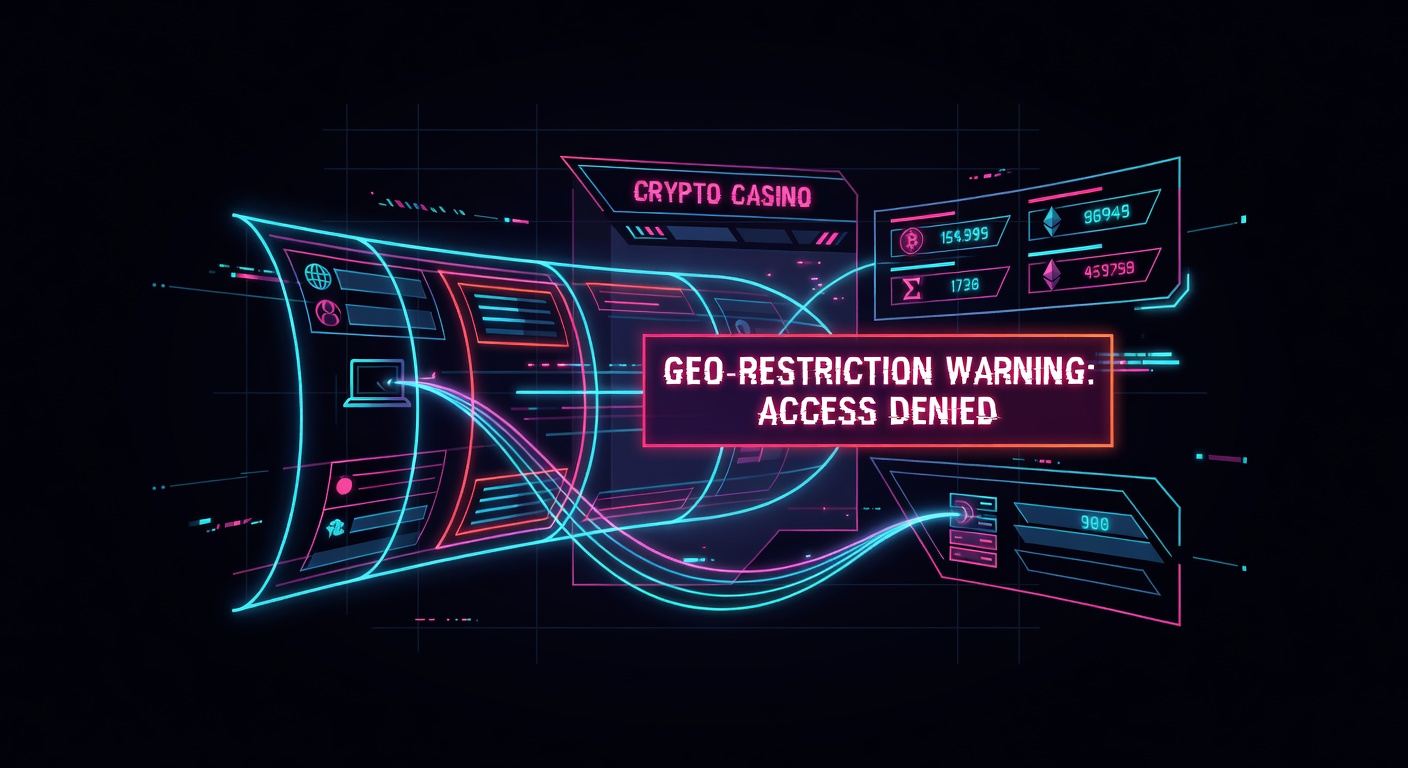
Let's be real about the landscape first. Crypto casinos operating under Curaçao eGaming licenses are not supposed to accept players from the US, UK, France, or a dozen other restricted jurisdictions. Some of them technically do not. They just do not ask hard questions if your deposit clears.
A VPN masks your IP. That is the beginning and end of what it actually does for you.
Round 1: What the Casino Actually Checks
The assumption that a VPN bypasses all geo-restrictions at a crypto casino is incorrect. Here is what a typical KYC and fraud stack looks at, and a VPN addresses exactly one of these:
- IP address and IP reputation scoring. A VPN changes your visible IP. Residential VPNs from providers like Mullvad or ProtonVPN look cleaner than datacenter VPs from AWS ranges, which are flagged immediately by most fraud detection layers.
- Browser fingerprint. Canvas fingerprinting, WebGL rendering, timezone settings, language headers. Your browser speaks even when your IP is hidden. Tools like Cover Your Tracks from the EFF will show you how trackable you are before and after a VPN. Spoiler: usually still very trackable.
- Payment metadata. If you are depositing USDT on TRC-20 from a wallet funded by a Coinbase account tied to a US address, the on-chain trail does not disappear because you connected to a server in the Netherlands. Some platforms run blockchain analytics from Chainalysis or Elliptic on incoming deposits.
- KYC documents. The moment a platform requests full KYC verification, your VPN is irrelevant. Your passport or driving license specifies your jurisdiction. If that jurisdiction is restricted, the account gets flagged.
Most casual VPN users think they are "provably anonymous." The provably fair mechanism on a smart contract casino addresses RNG transparency, not player identity. Those are completely separate systems.
Round 2: When They Come for Your Withdrawal
This is the specific risk that gets underweighted. You deposit 0.1 ETH using a VPN. You play. You win. You try to withdraw 0.4 ETH. The casino's risk team runs a review before releasing the funds. They check your IP history. They find a mismatch between your initial registration IP (Netherlands VPN node) and a later login from an IP that geolocates to Illinois. They freeze the account pending enhanced due diligence.
This happens. It is documented in forum threads on r/gambling and BitcoinTalk going back years. The platform's terms invariably include a clause allowing them to withhold funds from accounts that provided false information during registration. Using a VPN to access from a restricted jurisdiction counts as false information under those terms.
You cannot take them to arbitration in most cases because you agreed to their jurisdiction and dispute resolution process at signup. Curaçao eGaming's license terms do not provide the same player compensation mechanisms as UKGC or MGA licenses do.
Round 3: The Better Approach
If your jurisdiction has licensed, regulated platforms available, using those is structurally safer. UKGC-licensed platforms have mandatory player protection requirements, segregated funds requirements, and a formal complaints escalation process through the Alternative Dispute Resolution system. That is not nothing.
If you are specifically interested in crypto gambling for the provably fair mechanics or the smart contract transparency, there are platforms accessible without geo-restriction issues. Decentralized platforms built on-chain do not have a central KYC gate in the same way. You connect a wallet, you play, withdrawals go directly to your address. The risk shifts to smart contract risk rather than platform risk.
- Platforms like Rollbit, Stake, and BC.Game have varying geo-restriction enforcement. Some accept US players explicitly through gray-market operation. Some do not. Read the terms before depositing.
- The VPN question is mostly irrelevant at fully on-chain platforms where there is no account registration. There is no one to block your withdrawal.
- If a platform requires account creation and email verification, a VPN provides marginal protection against geo-blocking and significant risk of withdrawal complications.
Round 4: The AML Angle
One thing most VPN users at crypto casinos do not think about: the casino may not be the only entity paying attention to your transactions. Financial intelligence units in multiple jurisdictions run blockchain analytics as a matter of course. FINTRAC in Canada, FinCEN in the US, and the FCA in the UK all have programs monitoring suspicious cryptocurrency flows.
Using a casino on a platform not licensed in your jurisdiction does not protect you from domestic AML scrutiny of your crypto wallet. The trail on-chain is persistent. A VPN masks your connection to the website. It does not mask your wallet's transaction history.
If you are gambling with amounts that would register as unusual financial activity, that is worth thinking about before you fire up the VPN. The crypto casino is one node in a transaction graph that does not forget.
End of story
Scenes in this story