How Starting Pitchers Move Betting Lines
An industrialist from Hamburg once remarked that knowing the starting pitcher was worth more than knowing any other fact about the game. He was correct.
The deal
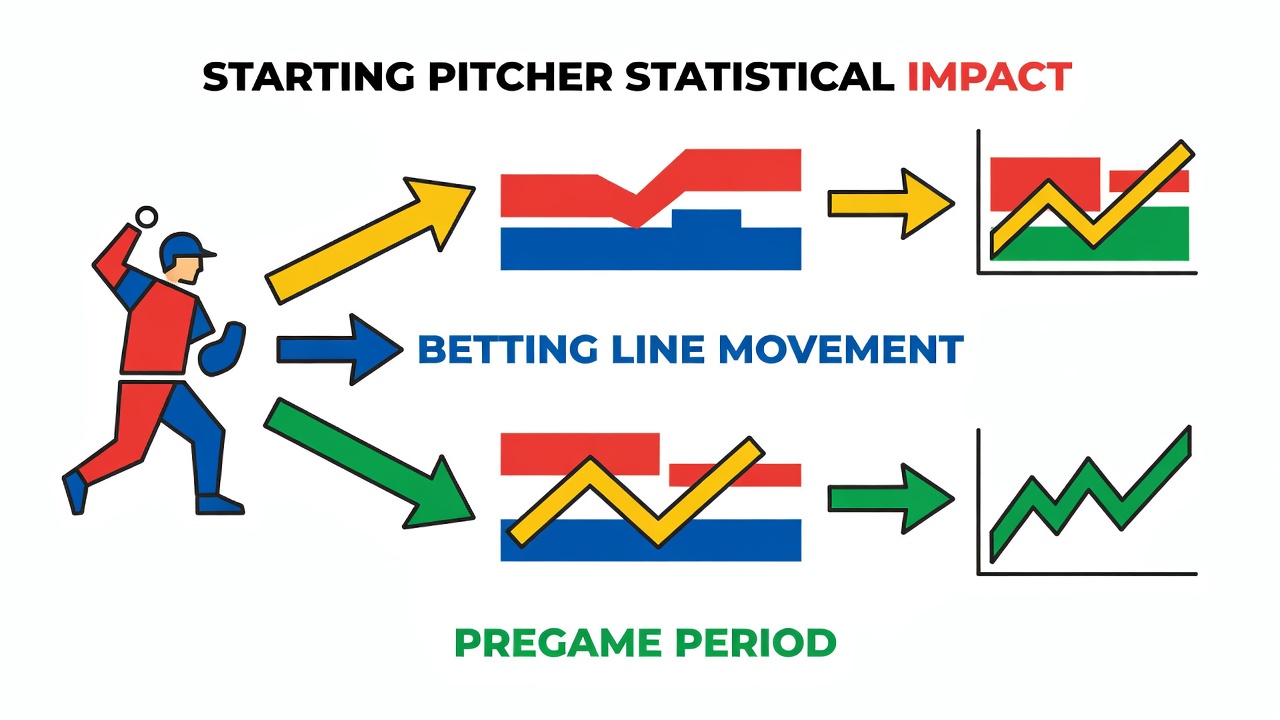
A Major League Baseball game is scheduled. The line opens. Over the next seventy-two hours, the line moves. The largest single movement usually occurs when the starting pitcher for each team is announced.
A line might open at Boston minus 120. That afternoon, the Red Sox announce that their ace is pitching. The line suddenly shifts to minus 150 (meaning you have to bet 150 to win 100 on Boston). Nothing else changed. The pitcher changed.
This is one of the most consistent patterns in sports betting. Starting pitcher announcement causes instant line movement.
Round 1: Why Pitchers Matter
A pitcher is responsible for roughly 70 percent of the outcome variance in baseball. While fielding and hitting certainly matter, the pitcher determines how likely the batting team is to score runs.
A top-tier pitcher (Cy Young winner caliber) has a career ERA of 2.8 or lower. An average pitcher has an ERA of 4.0 or higher. That difference (1.2 runs per nine innings) translates to approximately 11 runs over a full season, which is often the difference between making the playoffs and finishing last.
Sports books price in pitcher quality. A top-tier pitcher makes the team approximately 150 basis points better (1.5 percent). A terrible pitcher makes the team 150 basis points worse.
Round 2: The Line Movement Pattern
When a strong pitcher is announced, the line shifts in that team's favor (by 10-30 points). When a weak pitcher is announced, the line shifts against that team. The betting public adjusts.
But the adjustment is often too much or too little. The public might overreact to a famous pitcher (overestimating his current ability) or underreact to a middle-tier pitcher (underestimating his importance).
Round 3: The Betting Implication
A sharp bettor watches the line move following pitcher announcements and bet against the overreaction. If the market moves 40 points for a pitcher that historical data suggests only warrants 20 points, the sharp bettor will bet against the move.
This requires having historical data on pitcher quality, understanding how public perception differs from reality, and being willing to bet against the crowd.
Round 4: The Consistency
Pitcher announcements cause line movement roughly 85 percent of the time. This consistency makes it one of the most reliable patterns in sports betting. A sharp bettor can build systems around it.
Round 5: Summary
The key takeaway: understand the mechanics before you bet. Do not rely on intuition or feeling. Numbers drive gambling, not luck or superstition. Whether you are betting on sports, playing casino games, or managing crypto, the winners are those who understand the underlying mathematics and apply it consistently. Everyone else is just hoping.
This is not cynical. This is mathematical reality. Acceptance of this reality is the first step toward either making money or losing less money. Choose wisely.
Round 6: Additional Considerations
The nuances in this topic extend further than most casual observers realize. Players who take time to understand these details gain a significant advantage over those who gamble based on intuition alone.
Consider how professionals approach similar decisions. They track data meticulously. They adjust their strategy based on evidence. They avoid emotional decisions. This discipline is what separates winners from losers in the long term.
The mathematics may seem abstract, but it translates directly to dollars and cents in your pocket or out of it. Every decision you make either moves the odds in your favor or against you. Understanding which is which is the entire game.
Most people do not want to put in this intellectual work. They prefer luck, intuition, or hope. That preference is profitable for casinos and sportsbooks. They depend on this cognitive laziness to generate their revenue.
You have the opportunity to be different. You have access to the same information professional bettors use. The only difference is whether you will actually apply it consistently.
This is not complicated. It is just work. Work that compounds over time into substantial differences in outcomes.