Recognizing Phishing Emails That Impersonate Online Casinos
Online casino phishing has become, if one is being precise about it, a minor art form. The fraudsters have gotten good. The emails arrive with the right colours, the right bonus numbers, and just enough urgency to make a reasonable person click before they've finished their coffee. Here is how to read them.
The deal
The pianists at the Desert Inn, to borrow an image from a more elegant era of American leisure, knew every guest by sight. You could not walk through that lobby without someone knowing who you were. The modern online casino, by contrast, does not know you are you until you supply your username, your password, and occasionally your two-factor authentication code. This gap, between the institution's claim to know you and its actual inability to verify you without your cooperation, is precisely the gap that phishing exploits.
The phishing email impersonating an online casino is now a mature criminal product, deployed at scale by organised groups operating primarily out of Eastern Europe and Southeast Asia according to Europol's 2023 IOCTA report. These operations are not teenagers in basements. They are logistics businesses with template libraries, A/B testing on subject lines, and customer acquisition metrics that would not embarrass a mid-size legitimate marketing department.
Knowing what they look like, specifically and concretely, is the only reliable defence.
Round 1: The Markers That Identify Them
Phishing emails impersonating casinos use a consistent toolkit. The following are the specific signals that appear across virtually all documented samples:
-
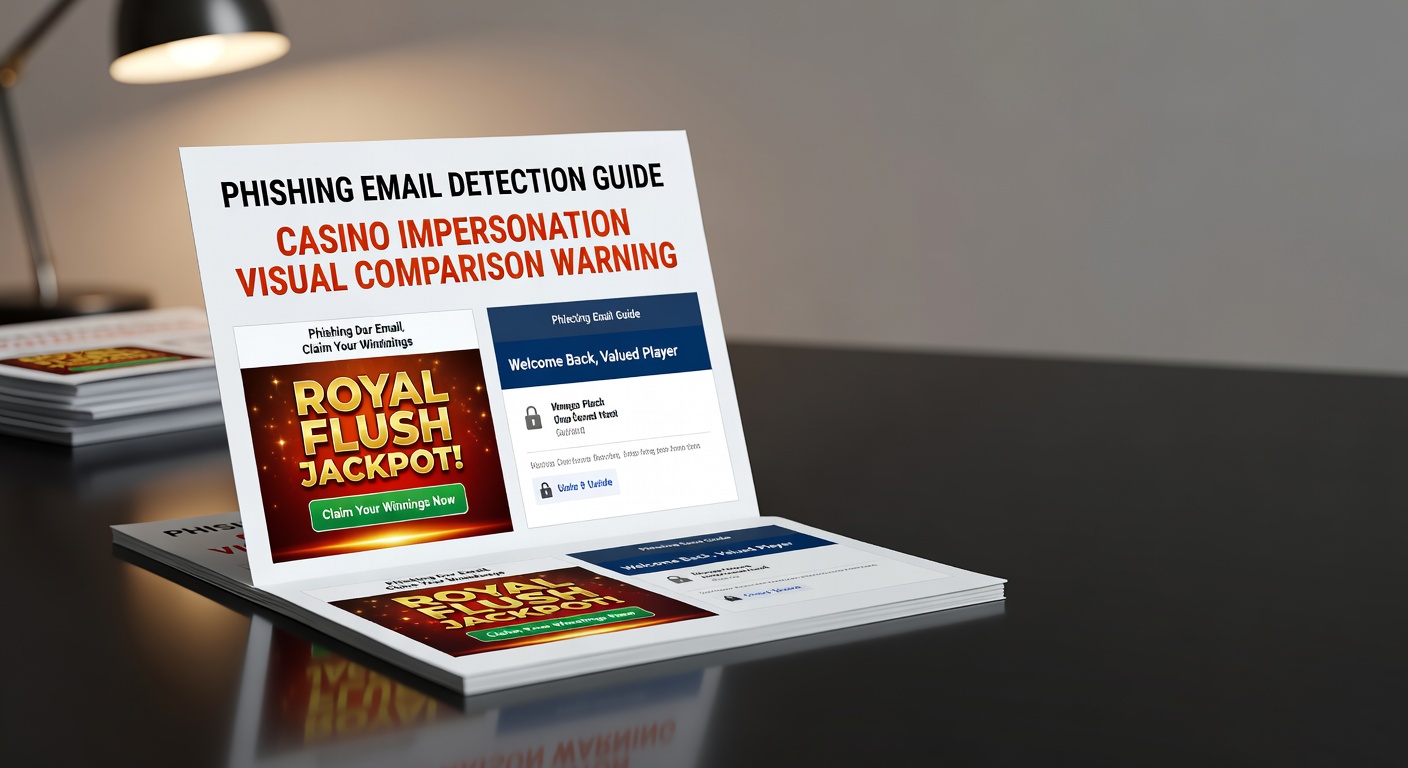
The from-domain mismatch. The display name says "PokerStars Security" or "Bet365 Bonus Team" but the actual sending address is something like cs-pokerstars@mailsvc-eu4.net or bonuses@bet365-promo-updates.com. The domain is always slightly wrong. Hover over the sender name before opening anything.
-
The bonus urgency. "Your 200 free spins expire in 24 hours." "Your account has been selected for a VIP reload bonus that requires verification." Real casinos licensed under MGA or UKGC rules are required to provide at minimum 72 hours' notice for any time-limited promotional offer communicated by direct marketing. A 24-hour countdown is almost always fabricated.
-
The verification link. The email asks you to "confirm your account" or "verify your identity" via a link that, when you hover over it, resolves to a domain that is not the casino's actual domain. Legitimate operators under UKGC guidance conduct KYC through their secure portal, not via emailed links.
-
The attachment. A real casino has no reason to send you a PDF attachment containing your account details. This is not how any licensed European operator communicates with players. An attachment is a red flag without exception.
-
The SSL mismatch. If you do click through to what appears to be the casino's login page, check the browser bar. A legitimate operator's site will show the correct registered domain with a valid SSL certificate. A phishing page will show either a mismatched domain or, increasingly, a lookalike domain registered specifically for the fraud: bet365-accounts-login.com rather than bet365.com.
Round 2: What the Good Fakes Look Like
The phishing emails that actually catch people are not the Nigerian prince variants. They are convincing productions.
A sample documented by cybersecurity firm Group-IB in 2022 impersonated 888 Casino with pixel-perfect reproduction of the operator's email template, including the correct footer disclaimers, the Malta Gaming Authority licence number (correctly transcribed from the real site), and the operator's registered address in Gibraltar. The tell was a single hyphen: the bonus link resolved to 888-casino-account-verify.com instead of the actual 888casino.com domain.
The fraudsters had clearly spent time on this. They got the licence number right. They got the footer right. They got the logo right. They made one mistake in forty details, and that one mistake was detectable only if the recipient knew to look at the actual domain rather than the display name.
The defence, accordingly, is to make checking the domain automatic. Before you click any link in any email purporting to be from a gambling operator, read the domain character by character. Not the display name. The domain.
Round 3: What Happens After You Click
The credential-harvesting process runs in seconds. You arrive at the fake login page, enter your credentials, and are typically redirected to the real casino's homepage with an error message suggesting something went wrong. You may not even realise anything has happened.
The harvested credentials are then used in two ways: direct account access to withdraw any available balance, and credential stuffing against other services, since a significant percentage of people reuse passwords across casino accounts, email accounts, and payment services.
If you have clicked a suspicious link and entered credentials, the response is immediate: change the password on the affected account, change it on any other account using the same password, contact the operator's fraud team directly via the number on their licensed website, and check whether any withdrawal requests have been submitted without your knowledge.
The Desert Inn pianists had it easy. They only had to remember faces.