Payment Security at Licensed Online Casinos
How do your deposits and withdrawals stay safe at licensed casinos? Five defensive layers, a few red flags, and what to actually worry about when you fund your account.
The deal
Your money is moving through the internet into someone else's account. This should terrify you for about two seconds, then you should understand how it is actually protected.
Round 1: 1. Operator Licensing
First layer: the operator itself is licensed. Bet365, DraftKings, Stake are not shadowy websites. They are licensed by regulators with actual enforcement power: the Malta Gaming Authority (MGA), the UK Gambling Commission (UKGC), Curaçao eGaming. These regulators require that operators maintain segregated player funds in separate bank accounts. Your money cannot be used for the casino's operating expenses. It is held in trust.
Round 2: 2. Bank-Level Encryption
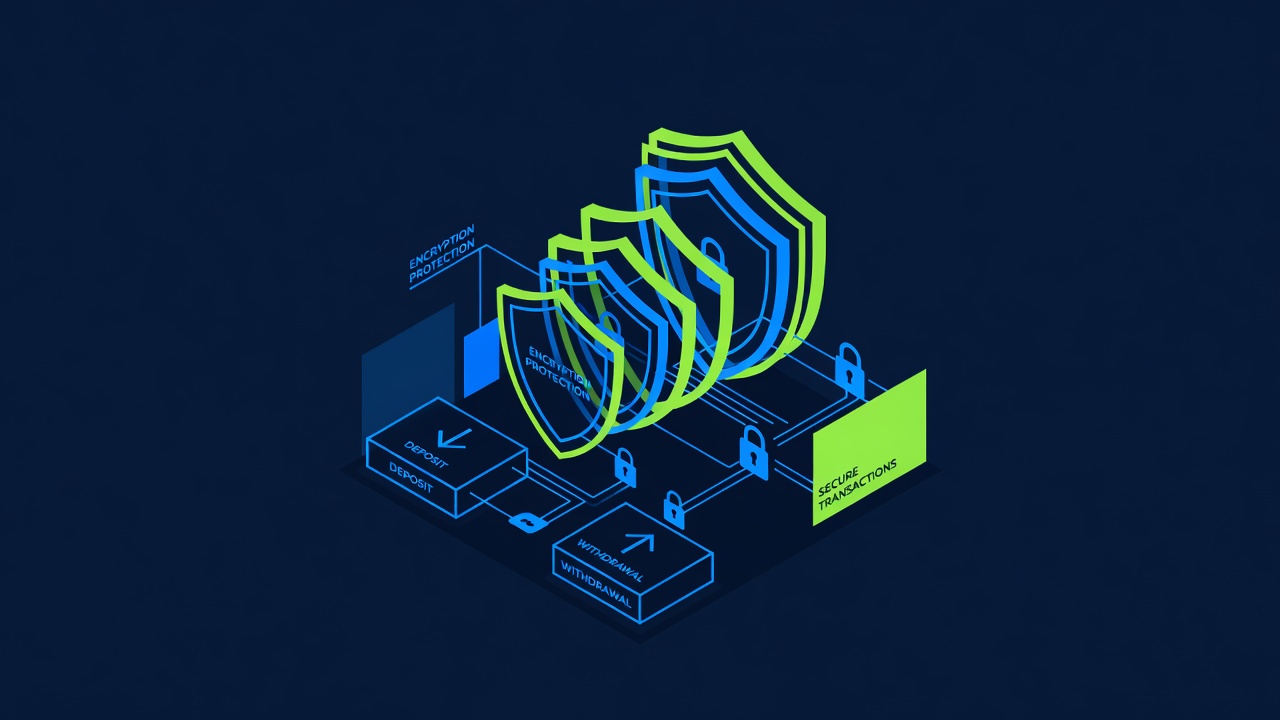
Second layer: SSL/TLS encryption. Every licensed casino uses HTTPS (you can see the little lock in your browser). This encrypts your data in transit. Someone on your wifi network cannot read your card number or login. Period. This is baseline security, but it is military-grade encryption. Practically unbreakable.
Round 3: 3. PCI-DSS Compliance
Third layer: Payment Card Industry compliance. Licensed casinos do not actually store your full card number. When you enter payment info, it goes directly to a payment processor (Stripe, PayPal, etc.) that handles the encryption and storage. The casino sees only the last four digits. Even if a hacker broke into the casino's servers, they would not get your card data.
Round 4: 4. AML and KYC Verification
Fourth layer: Know Your Customer (KYC) and Anti-Money Laundering (AML) checks. When you open an account and request a withdrawal, you have to verify your identity. A photo ID. A utility bill. This creates a paper trail that makes money laundering impractical. A criminal cannot easily funnel $100,000 through a UKGC-licensed sportsbook because the regulator demands evidence of legitimate income.
Round 5: 5. Chargeback Protection
Fifth layer: if you use a credit or debit card and dispute the charge, your bank can initiate a chargeback. Most licensed operators actually have higher chargeback thresholds than typical merchants because they are dealing with a higher-risk product. If you claim you did not make a deposit, the operator can produce logs of your login, your IP address, your entire activity. They are protected. You are also protected because your bank cannot just erase legitimate bets you made.
Round 6: Red Flags
What should actually concern you: unlicensed operators, operators licensed only in Curaçao or Antigua, or operators that do not display their license information publicly. If you cannot find the license number and regulator name on the site, you are gambling with someone's money, not with a licensed entity.
Also watch for: no SSL encryption (check for the lock), no KYC verification, no segregated accounts, no documented withdrawal delays. Fast withdrawal times are good. Instant withdrawals are a yellow flag (suggests they are using your money).
Round 7: The Real Risk
The actual risk is not that the casino steals your money during deposit. The actual risk is that you lose it playing. That risk is real and mathematical. Your payment security is actually quite strong at licensed operators. What you need to fear is your own edge, not the system.
A bank-level secure connection means your data is safe. The operator's licensing means your money is held separately. The combination means your practical security is excellent. The part that could destroy you is entirely legal.