Cricket Betting Basics: Formats, Markets, and Sharp Thinking
Cricket betting is complex because cricket formats are different. Test cricket, ODI, T20. Each is a different game with different odds.
The deal
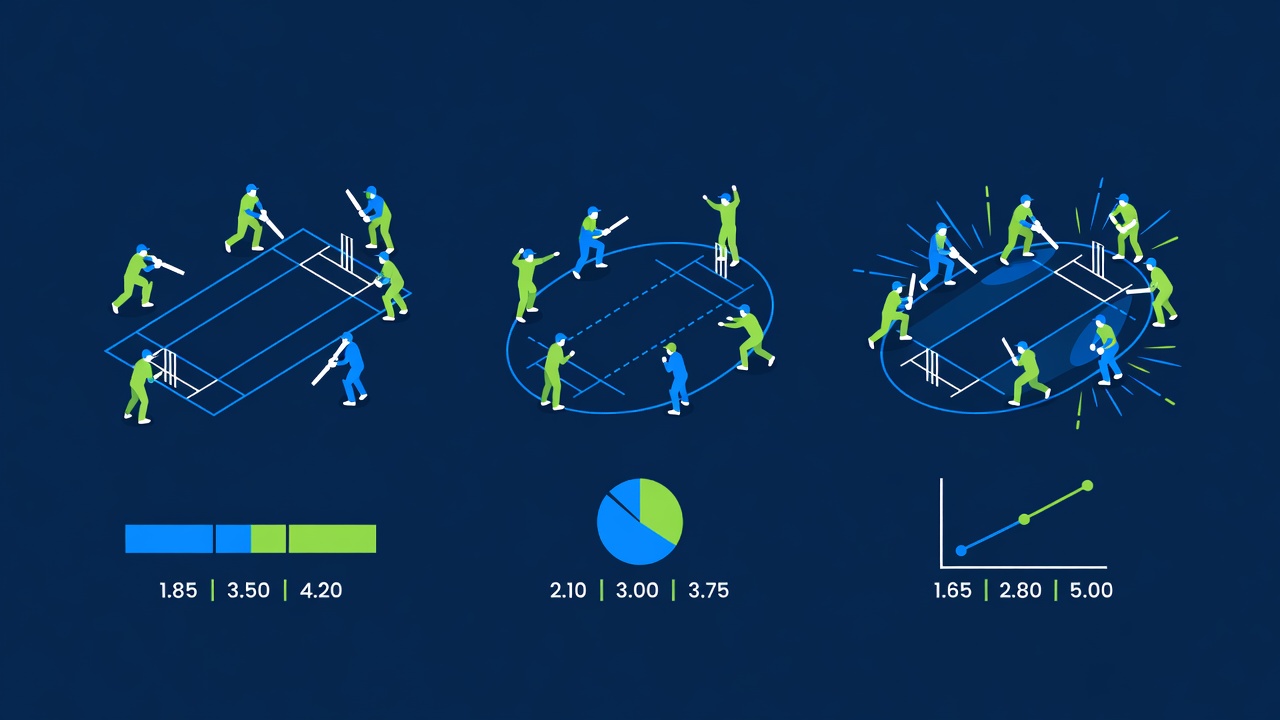
Cricket has three formats: Test (five days), ODI (one day, 50 overs), and T20 (twenty overs). Each format is a completely different game with completely different betting dynamics.
Test cricket is slow. Players can bat defensively for entire days. Draws are common. Betting is patient, long-term. Odds shift gradually as the match progresses.
ODI is faster. Teams play one innings each in a single day. The format encourages aggression. Batting order and momentum matter more than in Test.
T20 is fastest. Twenty overs means maybe three hours of play. It is almost pure aggression. A single batsman can change the entire match.
Round 1: The Betting Markets
Test match betting includes: match outcome (win, loss, draw), series outcome, player performance (runs scored, wickets taken), and in-play betting as the match progresses.
ODI betting is similar but draw is less common (though tied matches and super-overs exist).
T20 betting is often just match outcome (win or loss) plus in-play betting on individual overs.
Round 2: The Sharp Bettor Approach
A sharp bettor does not just pick a team. They calculate team strength in a specific format, against a specific opponent, in specific conditions.
India might be strong in ODI (they have good one-day players) but weak in T20 (historically their T20 players are not as good). The same team, different assessment.
Weather matters enormously in Test cricket. Rain can prevent a result. Dry pitches favor spinners. Wet pitches favor fast bowlers.
Conditions matter less in T20 (games almost always finish) but still matter. Smaller grounds favor batsmen. Bigger grounds favor bowlers.
Round 3: Why Casual Bettors Lose
Casual bettors treat cricket like soccer. Team is strong, bet on them. This ignores format differences.
A team that is strong in Test might be weak in T20. A team that is strong at home might be weak away. A player that is strong in one format might be useless in another.
Round 4: The Data Edge
Sharp cricket bettors have access to historical data on team performance in each format, against each opponent, in each location, with different playing conditions.
They track individual player performance in each format. They note when a new player joins the team and how it changes team dynamics.
They adjust for recency (recent form matters more than ancient history) and strength of opposition (beating a weak team says less than beating a strong team).
Round 5: The Practical Takeaway
If you are going to bet on cricket, understand that format matters. Do not apply Test cricket analysis to T20.
Understand that team strength is conditional. A team is not simply "strong" or "weak." They are strong in a format, against certain opposition, in certain conditions.
Assess all these factors before making a bet. The casual bettor who picks a team and bets will eventually lose to the sharp bettor who analyzes conditions.
Round 6: Summary
The key takeaway: understand the mechanics before you bet. Do not rely on intuition or feeling. Numbers drive gambling, not luck or superstition. Whether you are betting on sports, playing casino games, or managing crypto, the winners are those who understand the underlying mathematics and apply it consistently. Everyone else is just hoping.
This is not cynical. This is mathematical reality. Acceptance of this reality is the first step toward either making money or losing less money. Choose wisely.