Blackjack Surrender Rule: When to Use It and When to Skip It
The surrender option in blackjack is misunderstood. When should you actually use it? A measured examination of the mathematics.
The deal
The surrender option in blackjack sits in an unusual place: universally available at some tables, widely ignored by players, mathematically defensible in specific circumstances.
When the dealer shows an upcard, you may forfeit half your bet before play continues. You lose 50% immediately. The hand ends. This option exists because basic strategy sometimes counsels decisions that feel wrong.
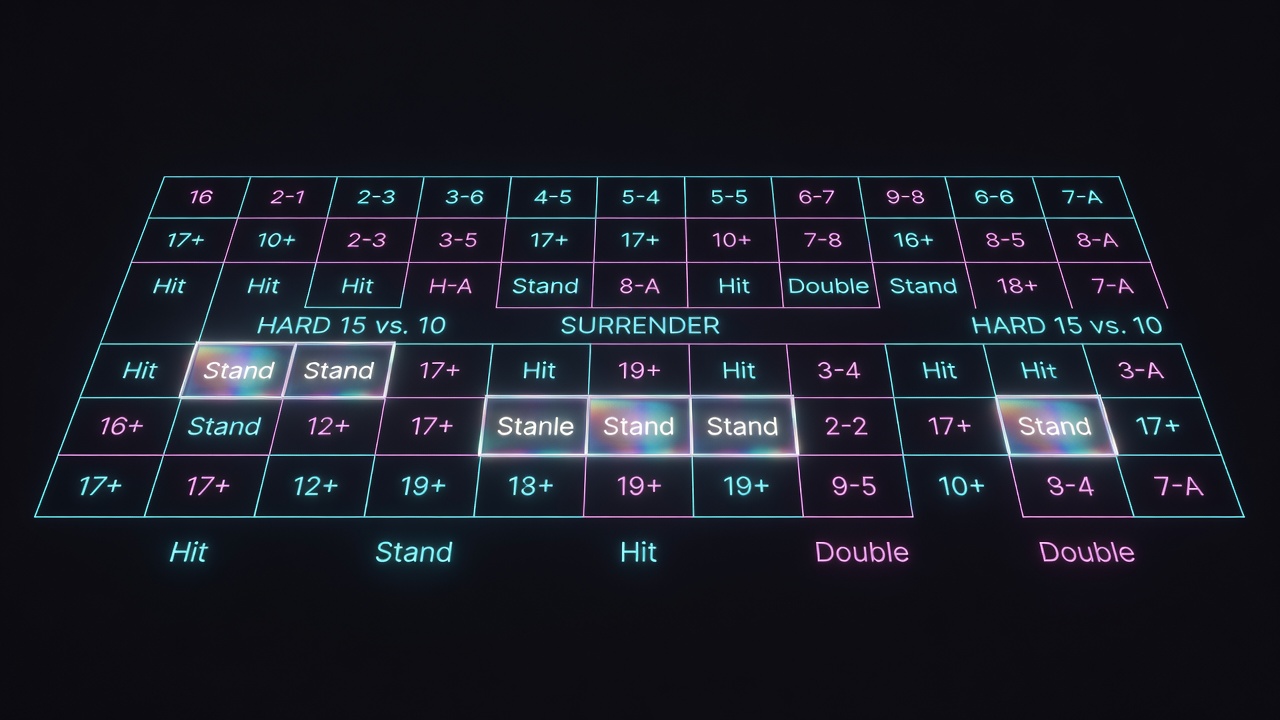
You hold 15. The dealer shows 10. Basic strategy says hit. You bust roughly 58% of the time. If you hit, you lose your full bet 58% of the time. If you surrender, you lose 50%.
Mathematically: surrender costs 50%. Hitting costs 58% average. Surrender saves 8 percentage points.
Round 1: When Surrender Applies
Two primary situations make surrender profitable:
First, you hold 16 and the dealer shows 9, 10, or Ace. Your winning probability drops below 25%. Surrendering saves money.
Second, you hold 15 and the dealer shows 10. Your winning probability drops below 30%. Surrender wins.
Bet365 and Evolution Gaming both offer surrender. The house edge with optimal surrender is 0.55%. Without it, the edge climbs to 0.7%.
Round 2: The Psychological Problem
Players hate surrender. It feels like defeat.
This is irrational. You're already losing the hand. Surrender minimizes loss in specific scenarios. It's mathematics, not emotion.
The confusion exists because most casual players don't think probabilistically. Standing on 15 against a 10 feels like you might win. Surrendering feels like certain loss.
Both are losses. Surrender simply loses less.
Round 3: Early vs Late Surrender
Some casinos offer early surrender (before dealer checks for blackjack). Others offer late surrender (after the check). Timing matters mathematically.
Early surrender is more valuable because you avoid losing the full bet when the dealer has natural blackjack. Late surrender is standard at most casinos.
DraftKings and Pragmatic Play typically use late rules.
Round 4: Correct Strategy
Surrender these hands only:
- 16 against dealer 9, 10, or Ace
- 15 against dealer 10
- 17 against dealer Ace (early surrender only)
Do not surrender other hands. The mathematics is clear.
NetEnt and other providers program these decisions into basic strategy guides. Follow them.
Round 5: The Honest Assessment
Surrender is a valuable tool when applied correctly. It saves money in mathematically losing scenarios. Used properly, it lowers the house edge by roughly 0.15 percentage points.
Use it. Don't apologise for using it. Your job is to play correctly, not to perform bravery for spectators.
Round 6: Additional Context
Understanding casino operations requires knowledge of multiple systems working in concert. The regulatory environment shapes how casinos operate. Different jurisdictions have different standards and requirements.
Player protection systems are increasingly sophisticated. Deposit limits, time reminders, and self-exclusion mechanisms help players maintain control. These tools are not perfect, but they represent genuine efforts at harm reduction.
The psychology of gambling affects player behavior. Understanding your own motivations and limits is critical. Playing responsibly means accepting that the house edge exists and is immutable.
Different games have different characteristics. Skill-based games like poker and blackjack reward study and practice. Chance-based games like slots and roulette reward patience and bankroll management.
The mathematics of gambling is elegant and immutable. Understanding these principles helps you make informed decisions about when and how to play.