Refer-a-Friend Bonuses: How Referral Rewards Typically Work
A casino offers you money to bring a friend. It sounds like they are thanking you. What they are really doing is paying you to recruit someone for them.
The deal
I play bingo twice a week at the church. Tuesday and Thursday afternoons, seven dollars to play. I win sometimes, nothing large. But the ladies there, we know each other, and we know when one of us brings a new person, the church adds them to the list and everybody benefits.
A casino refer-a-friend bonus works differently. The casino is not acting out of kindness. They are acting out of economics.
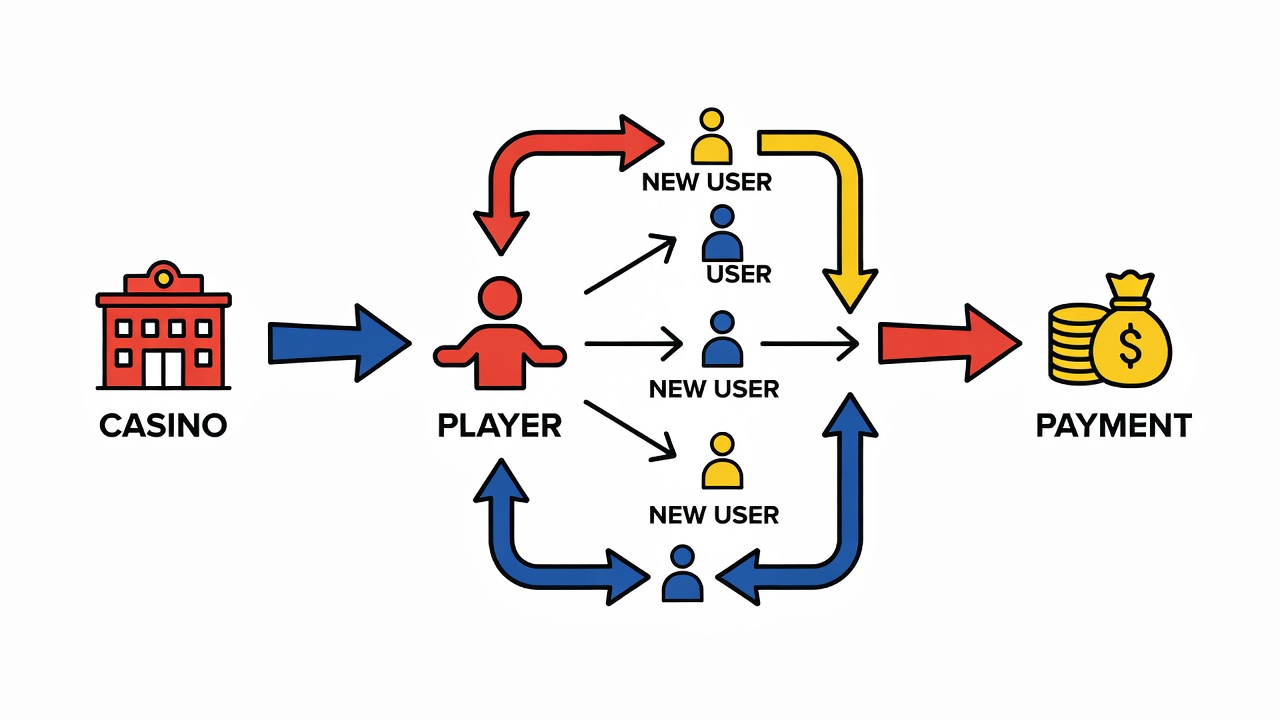
Here is how it works: the casino offers you a bonus (typically $25 to $100, depending on the platform) if you refer a friend who signs up and plays. Your friend signs up, deposits money, and plays. Once your friend meets certain requirements (deposits a minimum amount, plays a minimum number of hands, reaches a certain loss threshold), you both get the bonus.
Round 1: The Economics
Let's say the bonus is $50 for you and $50 for your friend, for a total of $100 in bonuses issued. What did the casino spend? The casino spent $100 in free play credits.
Your friend then deposits $200 (the requirement to unlock the bonus). Your friend plays and loses $150 (because casinos have a house edge, and most players lose). The casino now has the $200 deposit in their accounts. The $100 bonus has cost them $100 in value, but they have acquired a customer who lost $150 and deposited $200. From the casino's perspective, they spent $100 to acquire a customer who generated $150 in loss.
This is a successful customer acquisition for the casino.
Round 2: The Player's Perspective
You receive $50. Your friend received $50. This seems like a win for both of you. But your friend only got the $50 if they completed the bonus requirements, which means they had to deposit and play enough to unlock it. If your friend did not meet the requirements, they got nothing, and you got nothing.
So the bonus is conditional on your friend losing money or, at best, playing long enough for the house edge to take effect.
Round 3: The Hidden Mechanism
Refer-a-friend bonuses work because of social proof and word-of-mouth. A friend is more likely to trust a recommendation from you than from an advertisement. The casino is paying you to do their marketing.
This is why the bonus exists: because it works. Friends refer friends, deposits happen, losses accumulate, and the casino's acquisition cost is lower than traditional advertising.
Round 4: The Honest Assessment
If your friend is going to gamble anyway, a refer-a-friend bonus is genuinely worth it. You might as well get $50 for introducing them somewhere. But if your friend is not going to gamble, do not refer them for $50. You are recruiting someone to lose money for a small commission.
I think of refer-a-friend bonuses the way I think of a lot of casino promotions: they exist because they are profitable for the casino, which means they are not profitable for the player. The casino would not offer them if they lost money on the deal.
Bring your friend if your friend wants to go. But do not bring your friend for the bonus.