How HTML5 Transformed Mobile Slot Design
Flash is dead and HTML5 killed it. But what actually changed for mobile slots when that happened? The answer is way more interesting than you'd expect.
The deal
Okay so I need to talk about something that most slot players just completely gloss over. And it's actually kind of wild when you dig into the numbers.
Adobe killed Flash Player support on December 31, 2020. Full stop. Gone. And that date matters because for like a decade, basically all online casino games ran on Flash.
Round 1: Wait, Flash Was Actually Everywhere
Here's the crazy part. Back in 2010-2012, if you wanted to play a Microgaming or NetEnt slot on your phone, you just... couldn't. Not properly. Flash didn't work on iOS at all. Steve Jobs published that famous open letter in 2010 called "Thoughts on Flash" and just absolutely roasted it. Apple never supported it.
So what were mobile players doing? They were playing stripped-down, basically broken versions of games. Or they weren't playing at all.
And then HTML5 showed up and everything changed.
Round 2: The Myth: HTML5 Was Just Flash But In a Browser
No. No no no. Stay with me here because this is where people get it wrong.
Flash games ran inside a plugin. The casino had to build a Flash version. They'd also build a download client version. Sometimes a mobile version on top of that. Three separate codebases for one game. That's insane from a development standpoint.
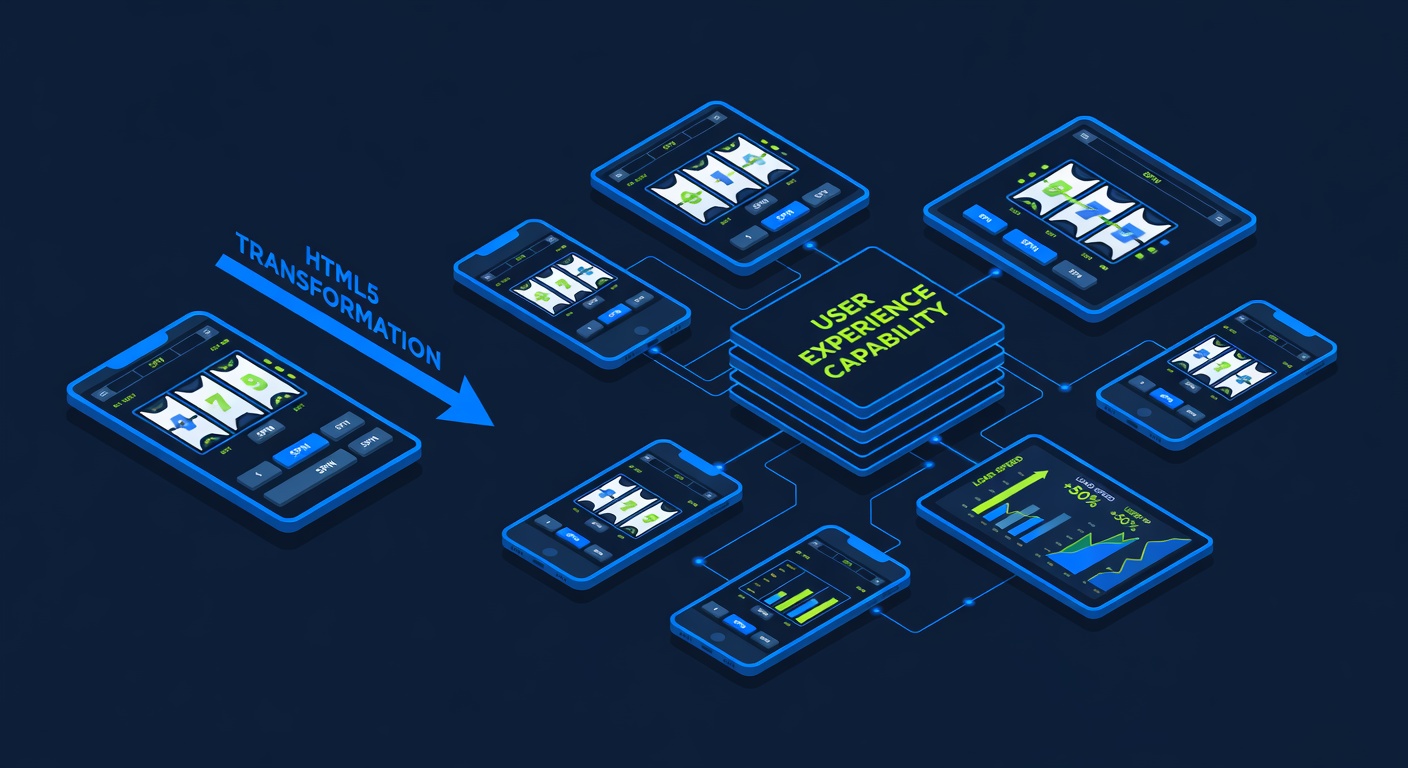
HTML5 runs natively in the browser. One codebase. The game scales to whatever screen it's on. A game built in HTML5 with proper CSS media queries can render on a 27-inch monitor and a 5-inch phone without anyone rebuilding anything.
NetEnt were early movers here. They announced their Touch platform in 2012, which was HTML5-native from the start. The graphics quality compared to Flash? Actually better, because HTML5 gave developers access to WebGL for hardware-accelerated rendering.
Round 3: The Performance Numbers Are Actually Insane
Flash on mobile was pulling something like 15-20 frames per second on mid-range phones from 2011. It was choppy. It drained battery fast. It got hot.
Modern HTML5 slots running on current mobile hardware can hit 60fps consistently. That's not a marketing claim. That's the standard WebGL render target on any phone from the last four years.
Load times dropped too. A typical Flash slot took 30-45 seconds to load on a 3G connection. HTML5 slots with lazy-loading assets and compressed sprite sheets? Under 10 seconds on 4G. Under 5 on decent WiFi.
Round 4: Touch Controls Changed the Whole Game Design Logic
This is the part I find genuinely wild. Flash games were designed around a mouse cursor. Buttons were small. Interfaces assumed precision clicking.
HTML5 let developers actually design for fingers. Big tap targets. Swipe gestures. Hold-to-spin mechanics that you literally cannot do with a mouse. Games like Big Time Gaming's Megaways slots launched in 2016 had interfaces that only really made sense on touchscreen. The 117,649-ways-to-win mechanic with cascading symbols and dynamic reel heights? That's a visual complexity that reads better on a phone held in portrait mode than on a desktop browser, weirdly enough.
Round 5: The Myth: All Slots Play the Same on Mobile
Absolutely not. This is something I tested personally across about twenty different titles. Some developers still treat mobile as an afterthought. You can tell immediately. The font is tiny. The paytable requires pinching. The spin button is in the corner.
Pragmatic Play and Play'n GO are both genuinely excellent at mobile-first design. Their interfaces were clearly built for portrait orientation first, desktop second. Evolution's live casino games are another story entirely, because live streaming adds a whole latency and bandwidth dimension that's separate from the slot mechanics.
The short version: HTML5 didn't just move the games to mobile. It forced developers to rethink the entire interface paradigm. Some of them did it well. A lot of them just ported the desktop layout to a smaller screen and called it done.
The ones who actually redesigned for touch? Those are the games that feel right when you pick up your phone at 11pm and just want to spin for a bit.