How Steve Wynn Reshaped the Las Vegas Strip
Steve Wynn's opening of The Mirage in November 1989 established a model for Las Vegas development that remained dominant for the following two decades. Understanding what changed requires examining specific decisions about capital, design, and amenity provision.
The deal
Steve Wynn opened The Mirage on November 22, 1989, with a construction cost of $630 million. That figure was, at the time, the largest amount ever spent on a hotel-casino. The financing model was itself a departure: Drexel Burnham Lambert underwrote junk bonds to fund the project, a capital structure that the industry had not previously employed at that scale. The Mirage needed to generate approximately $1 million per day in revenue to service its debt.
It did. Within the first year, The Mirage was the most profitable hotel-casino in Nevada.
Round 1: What the Design Actually Changed
Prior to 1989, the dominant model on the Strip was the low-rise hotel with a large gaming floor and modest amenities. The Desert Inn and the Sands offered good rooms but the core product was the casino. Entertainment was secondary. Food and beverage was secondary. The room was a place to sleep before returning to the tables.
Wynn changed this sequencing deliberately. The Mirage placed its signature attractions, including the tropical rainforest atrium, the exterior volcano, and the Siegfried and Roy white tiger habitat, in positions that were visible from or audible at the street level. A visitor did not need to enter the casino to be affected by the property. The building marketed itself through spectacle.
Accordingly, non-gaming revenue at The Mirage represented a higher share of total revenue than at comparable Strip properties. Wynn's thesis was that a resort destination would capture visitor spending across a full day, not just across gaming sessions. The restaurant and show revenue could subsidize lower hold rates in the casino, which in turn attracted higher-volume players.
The architecture firm responsible for much of the interior was Atlandia Design, with Wynn himself heavily involved in design decisions. The specific use of natural materials, the atrium's constant temperature control, the carpet patterns chosen to direct foot traffic toward the gaming floor: these were deliberate choices, not standard specifications.
Round 2: Bellagio and the Escalation
Wynn sold The Mirage to MGM Grand for $6.4 billion in 2000 and used the proceeds to fund Bellagio, which opened in October 1998 at a cost of $1.6 billion. The escalation from Mirage to Bellagio followed the same logic taken further.
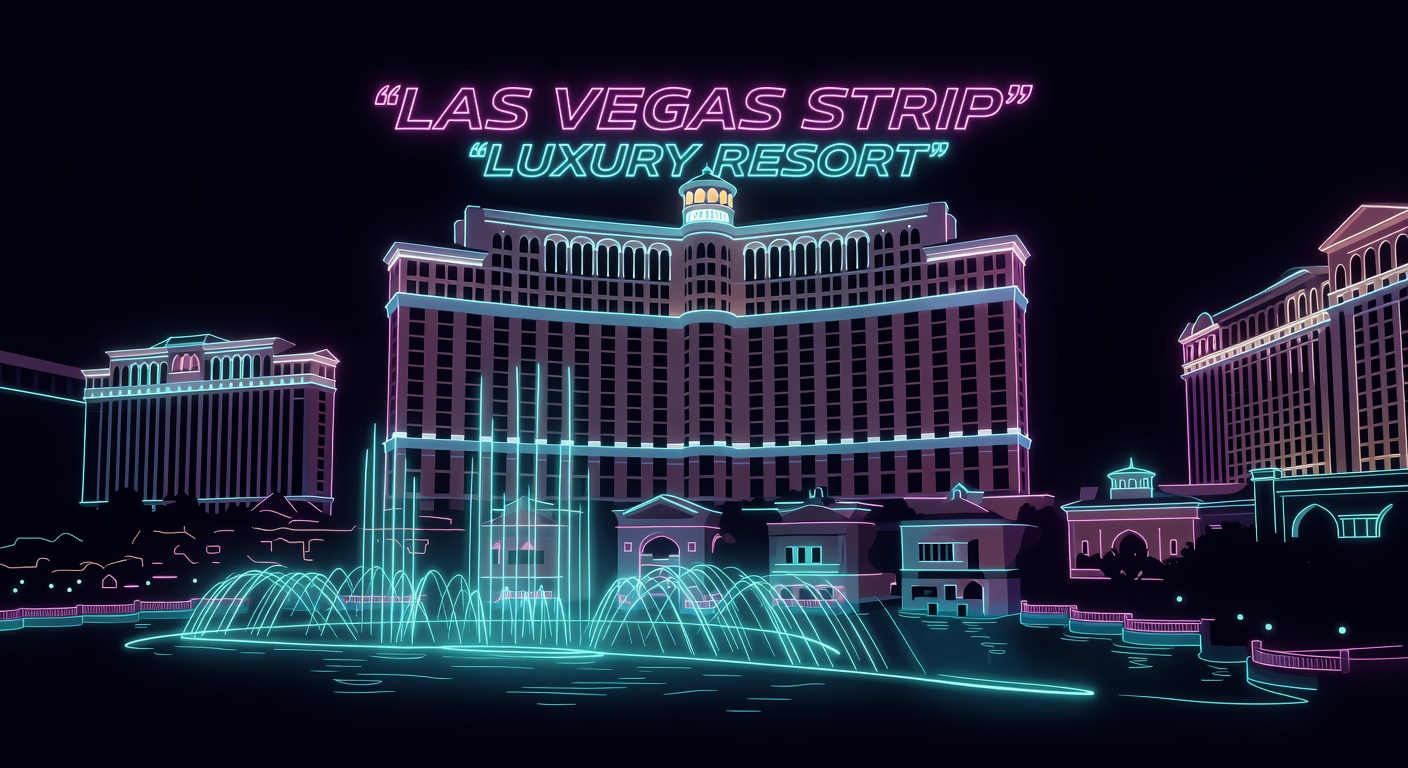
Bellagio featured an eight-acre artificial lake with 1,214 fountains choreographed to music. The Bellagio Gallery of Fine Art opened with original works by Monet, Picasso, and Renoir. The Conservatory and Botanical Gardens required a team of 140 full-time horticulturalists maintaining rotating seasonal displays.
These were expensive amenities that produced no direct gaming revenue. Wynn's position, stated plainly in interviews during the period, was that they produced something more valuable: a reason for visitors to return who were not primarily motivated by gambling. Las Vegas had been marketing itself to gamblers since Bugsy Siegel opened the Flamingo in 1946. Wynn was marketing to everyone else.
In practice, Bellagio's non-gaming revenue exceeded 50% of total revenue within five years of opening, a figure that fundamentally altered how analysts modeled casino resort profitability.
Round 3: What Followed
The period from 1989 to 2009 produced a wave of large-scale integrated resort development on the Strip that was directly attributable to the Mirage-Bellagio template. Mandalay Bay opened in 1999. Paris Las Vegas and Venetian opened the same year. MGM Grand expanded. Caesars Palace, which predated Wynn's entry into the Strip, underwent a substantial renovation and tower addition program.
All of these properties adopted the core proposition: the casino as one component within a larger hospitality and entertainment offering. The shift changed the labor profile of Strip employment, increasing the ratio of hospitality and food service workers relative to gaming floor staff.
Wynn departed Wynn Resorts in February 2018 following allegations of sexual misconduct, which he denied. The company retained his name but underwent governance restructuring under new executive leadership. The properties he built remain among the highest-revenue per available room operations on the Strip, measured by Nevada Gaming Control Board data through 2023.
The model he established in 1989 remains the operating standard for large integrated casino resorts worldwide, including developments in Singapore's Marina Bay Sands, Cotai Strip Macau, and proposed future developments in New York and Texas.